Simple Korean Dak Gomtang Recipe
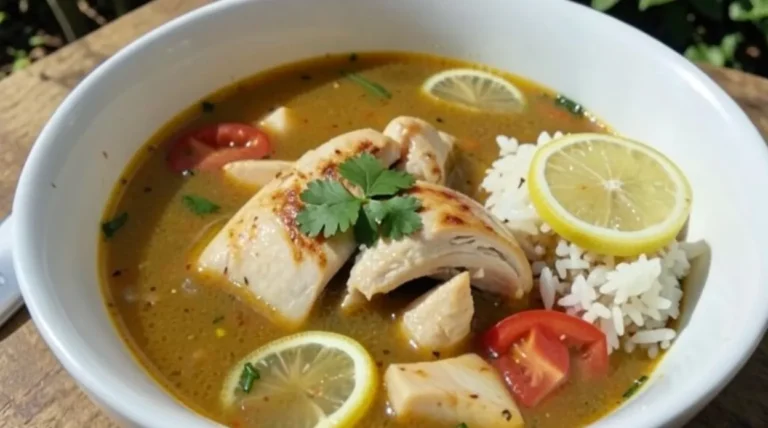
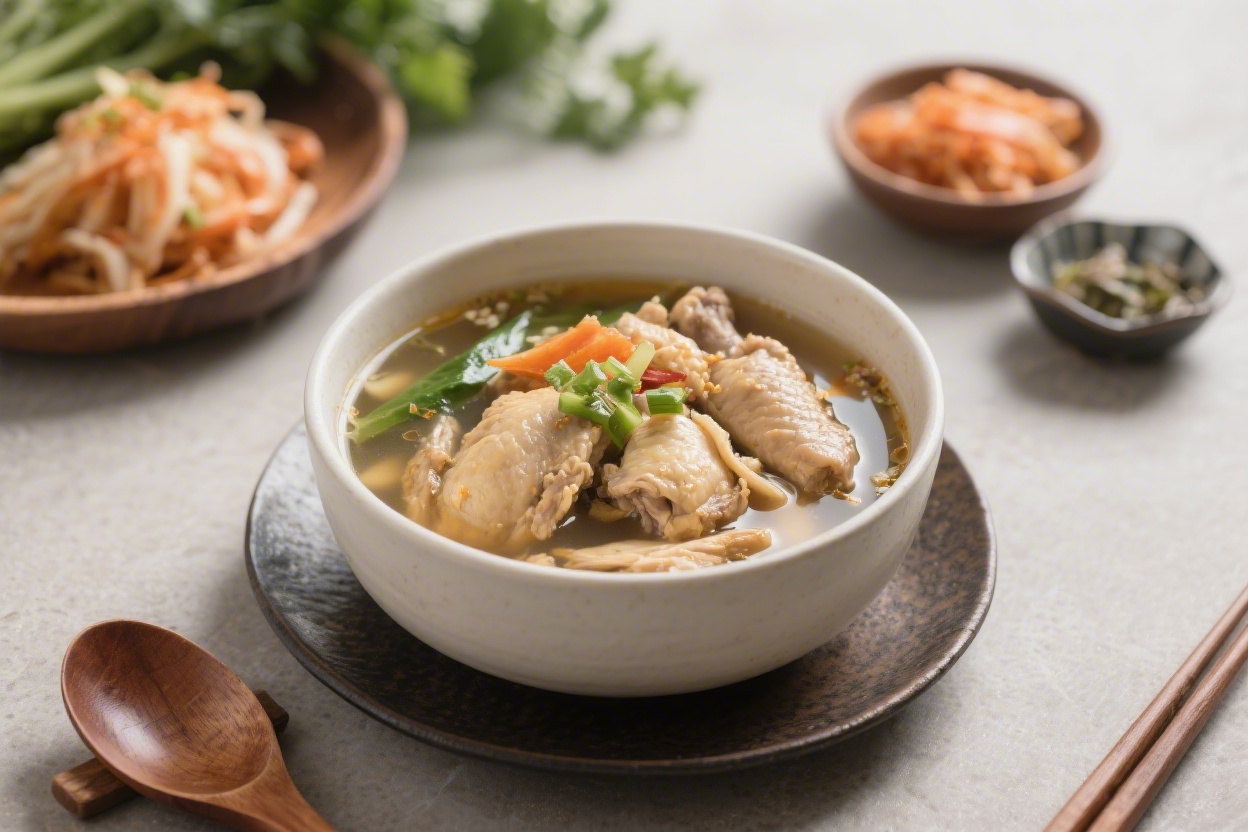
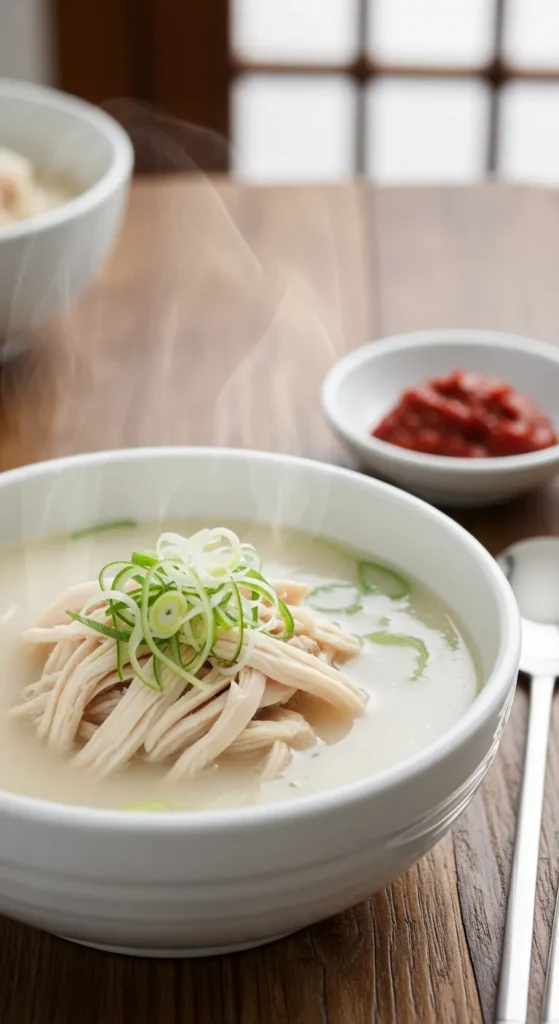
This is the kind of soup you make when you want something warm, soothing, and straightforward. Dak Gomtang is a classic Korean chicken soup with a clean, clear broth and tender shreds of chicken. It’s mild, comforting, and easy to customize at the table with salt, pepper, and scallions.
Think of it as chicken soup’s gentle, nourishing cousin—perfect for a quiet night in or a make-ahead meal for the week.
What Makes This Special
Unlike rich, creamy soups, Dak Gomtang is all about clarity and depth. You simmer chicken long and low until the broth turns slightly milky from the collagen, without using any dairy. The flavor is subtle and pure, so each topping—scallions, sesame oil, or a pinch of salt—really shines.
It’s also hands-off and family-friendly.
Most of the work happens in the pot, and you can set out simple add-ons so everyone can season their own bowl. It’s the kind of soup that tastes even better the next day, which makes it ideal for meal prep.
What You’ll Need
- 1 whole chicken (3–4 pounds), or 2–3 pounds bone-in chicken parts (legs, thighs, wings)
- 1 large onion, halved (leave skin on for color, optional)
- 6–8 cloves garlic, smashed
- 2-inch piece ginger, sliced (optional but recommended)
- 3–4 scallions (white parts for broth, green parts for garnish)
- 8–10 cups water (enough to fully cover chicken)
- 1 tablespoon kosher salt (for seasoning broth to taste)
- Freshly ground black pepper, to taste
- Cooked white rice (short-grain preferred), for serving
- Sesame oil, for finishing (optional)
- Guk-ganjang (Korean soup soy sauce) or light soy sauce, to taste (optional)
How to Make It
- Prep the chicken. Rinse the chicken under cold water and remove any excess fat or giblets. Pat it dry.If using parts, keep them bone-in for the best flavor and body in the broth.
- Build the base. Place the chicken in a large pot with onion, garlic, ginger, and the white parts of the scallions. Add enough water to cover by about an inch.
- Bring to a gentle boil. Heat over medium-high until it starts to bubble. Skim off any foam that rises to the surface.This helps keep the broth clean-tasting.
- Simmer low and slow. Reduce to a gentle simmer, cover partially, and cook for 60–90 minutes. The meat should be very tender and the broth slightly cloudy from the collagen.
- Remove and shred the chicken. Carefully lift the chicken out and let it cool slightly. Shred the meat into bite-size pieces, discarding skin and bones.Keep it simple—no need to over-season here.
- Strain the broth. Pour the broth through a fine-mesh strainer into a clean pot. Discard the solids. Return the clear broth to the stove.
- Season thoughtfully. Add the shredded chicken back to the pot.Season with salt and a few grinds of black pepper. If you like a touch more savoriness, stir in a splash of guk-ganjang or light soy sauce.
- Garnish and serve. Ladle the soup into bowls over a scoop of hot rice. Top with sliced scallion greens and a few drops of sesame oil.Let each person add extra salt and pepper to taste.
Keeping It Fresh
- Fridge: Store the soup (without rice) in an airtight container for up to 4 days. Keep rice separate to prevent it from soaking up all the broth.
- Freeze: Freeze broth and shredded chicken in portions for up to 3 months. Thaw overnight in the fridge, then reheat gently on the stove.
- Reheat tips: Warm over low heat to keep the broth clear and prevent the chicken from drying out.Add a splash of water if it’s reduced too much.
- Freshen before serving: Stir in chopped scallions and a touch of sesame oil right before eating to brighten the flavor.
Health Benefits
- High in protein: Chicken provides lean protein that’s satisfying and supports muscle repair.
- Gentle on the stomach: The mild broth is easy to digest, great for days when you want something soothing.
- Hydration and electrolytes: Warm broth helps with hydration; a little salt supports electrolyte balance.
- Collagen-rich broth: Long simmering pulls collagen from bones and connective tissue, giving the soup body and a silky feel.
- Customizable sodium: Season at the table so each person can control salt intake.
Common Mistakes to Avoid
- Boiling too hard: A rolling boil can make the broth greasy and cloudy in a harsh way. Keep it at a gentle simmer.
- Skipping the skim: Not skimming early foam leaves impurities in the broth and dulls the flavor.
- Over-seasoning the pot: This soup is meant to be mild. Aim for balanced salt in the pot and let diners finish to taste.
- Cooking boneless meat: Bones add flavor and body.Use bone-in pieces for the best result.
- Stirring in rice too soon: Adding rice to the pot makes it soggy. Keep rice in the bowl and pour the soup over it.
Variations You Can Try
- Mushroom boost: Add a handful of dried shiitakes to the simmer for extra umami. Slice and return them to the soup.
- Glass noodles (dangmyeon): Soak and cook sweet potato noodles separately, then add to bowls before ladling in the broth.
- Spicy dip on the side: Serve with a small dish of gochugaru, minced garlic, and a splash of soy sauce for those who want heat.
- Radish twist: Add thick slices of Korean radish (mu) in the last 20–30 minutes for a gentle sweetness.
- Herb finish: A few cilantro leaves or a squeeze of lemon is not traditional but brightens the soup nicely.
FAQ’s
Can I make this in an Instant Pot?
Yes.
Cook the chicken, aromatics, and water on High Pressure for 25 minutes, then natural release for 15 minutes. Shred the chicken, strain the broth, and season as usual.
What if I only have chicken breasts?
You can use them, but the broth will be lighter and less rich. Add a few wings or a small pack of bone-in thighs if possible to boost flavor and body.
How do I keep the broth clear?
Start with cold water, bring to a gentle boil, skim the foam, and simmer low.
Strain through a fine-mesh sieve, and avoid vigorous stirring.
Is soup soy sauce the same as regular soy sauce?
No. Guk-ganjang (soup soy sauce) is saltier and lighter in color, made for seasoning broths without darkening them. If using regular soy sauce, add carefully and in small amounts.
Can I add vegetables?
Absolutely.
Korean radish, carrots, and mushrooms work well. Add sturdy veggies during the last 20–30 minutes so they stay tender, not mushy.
How do I make it gluten-free?
The soup itself is naturally gluten-free. Just avoid soy sauce with wheat; use tamari or a certified gluten-free soy alternative if you want that savoriness.
What should I serve with Dak Gomtang?
Serve with steamed rice and simple kimchi or pickles.
A small dish of salt and pepper at the table lets everyone fine-tune their bowl.
Can I use store-bought broth?
You can, but simmering the chicken from scratch gives the signature milky clarity and gentle flavor. If using store-bought, choose low-sodium and still add bones or wings to enrich it.
Related Recipes
- Warm and Comforting Korean Gamjatang (Pork Bone Soup) Recipe – A Hearty, Homey Favorite
- Easy Korean Mandu Guk Recipe for Cozy Meals
- Korean Soup Recipe – A Cozy, Flavor-Packed Classic
Final Thoughts
Dak Gomtang is comfort in a bowl—simple ingredients, clean flavors, and just enough richness to feel nourishing. It’s a no-stress recipe that fits busy weeknights and slow weekends alike.
Keep the seasoning light in the pot, set out your garnishes, and let everyone make their perfect bowl. With a little rice and a sprinkle of scallions, this classic Korean chicken soup is as cozy as it gets.
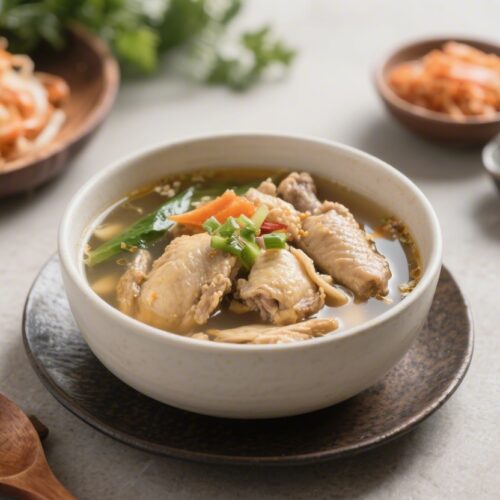
Simple Korean Dak Gomtang (Chicken Soup) Recipe - Cozy, Clear, and Comforting
Ingredients
- 1 whole chicken (3–4 pounds), or 2–3 pounds bone-in chicken parts (legs, thighs, wings)
- 1 large onion, halved (leave skin on for color, optional)
- 6–8 cloves garlic, smashed
- 2-inch piece ginger, sliced (optional but recommended)
- 3–4 scallions (white parts for broth, green parts for garnish)
- 8–10 cups water (enough to fully cover chicken)
- 1 tablespoon kosher salt (for seasoning broth to taste)
- Freshly ground black pepper, to taste
- Cooked white rice (short-grain preferred), for serving
- Sesame oil, for finishing (optional)
- Guk-ganjang (Korean soup soy sauce) or light soy sauce, to taste (optional)
Instructions
- Prep the chicken. Rinse the chicken under cold water and remove any excess fat or giblets. Pat it dry. If using parts, keep them bone-in for the best flavor and body in the broth.
- Build the base. Place the chicken in a large pot with onion, garlic, ginger, and the white parts of the scallions. Add enough water to cover by about an inch.
- Bring to a gentle boil. Heat over medium-high until it starts to bubble. Skim off any foam that rises to the surface. This helps keep the broth clean-tasting.
- Simmer low and slow. Reduce to a gentle simmer, cover partially, and cook for 60–90 minutes. The meat should be very tender and the broth slightly cloudy from the collagen.
- Remove and shred the chicken. Carefully lift the chicken out and let it cool slightly. Shred the meat into bite-size pieces, discarding skin and bones. Keep it simple—no need to over-season here.
- Strain the broth. Pour the broth through a fine-mesh strainer into a clean pot. Discard the solids. Return the clear broth to the stove.
- Season thoughtfully. Add the shredded chicken back to the pot. Season with salt and a few grinds of black pepper. If you like a touch more savoriness, stir in a splash of guk-ganjang or light soy sauce.
- Garnish and serve. Ladle the soup into bowls over a scoop of hot rice. Top with sliced scallion greens and a few drops of sesame oil. Let each person add extra salt and pepper to taste.
Printable Recipe Card
Want just the essential recipe details without scrolling through the article? Get our printable recipe card with just the ingredients and instructions.