Warm and Comforting Korean Gamjatang Recipe
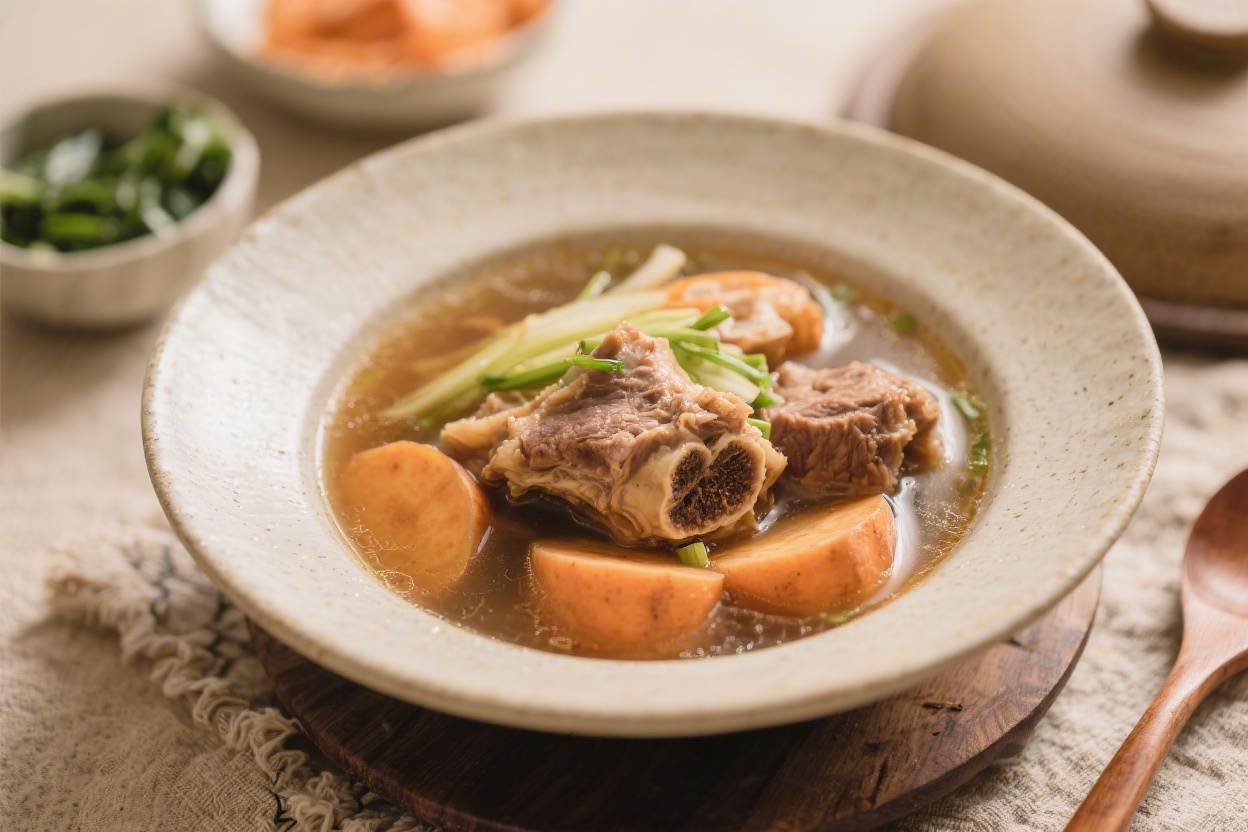
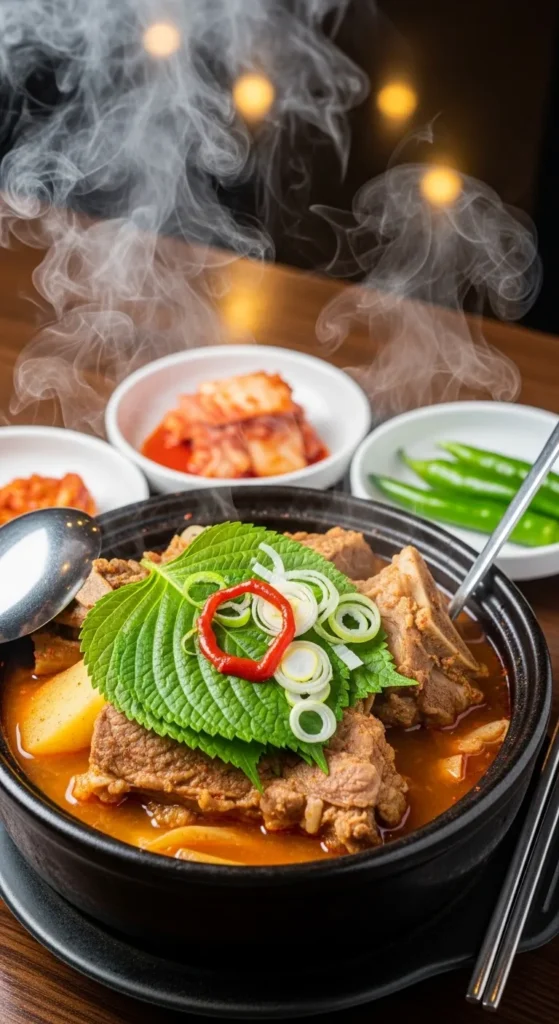
Gamjatang is the kind of soup that warms you from the inside out. Built on rich pork bones, smoky chili paste, and earthy perilla seeds, it’s hearty without being heavy. The broth is deeply savory, the meat is fall-off-the-bone tender, and the potatoes soak up all that flavor.
This is the bowl you want on a chilly evening or when you need a big, soul-hugging meal. Make a pot, invite a friend, and let the table get quiet in that happy, content way.
What Makes This Special
Gamjatang stands out because it layers flavors the way only slow-cooked dishes can. You get a backbone of collagen-rich pork bone broth, citrusy warmth from perilla seeds, and an earthy balance from Napa cabbage and potatoes.
A touch of gochugaru (Korean chili flakes) and gochujang (chili paste) adds heat that’s warming rather than overwhelming.
Another highlight is texture. You’ll find tender meat you can pull with chopsticks, soft potatoes, and crunchy greens at the end. It’s comfort food, but it’s also bright and aromatic thanks to garlic, ginger, and green onions.
Shopping List
- Pork neck bones or pork spine (3–4 pounds), rinsed
- Potatoes (3–4 medium, waxy or Yukon Gold), peeled and cut into large chunks
- Napa cabbage (1/2 medium head), cut into large pieces
- Perilla leaves (optional but traditional, about 10), roughly torn
- Perilla seed powder (deulkkae garu) (3–4 tablespoons)
- Gochugaru (Korean red pepper flakes, 1–2 tablespoons, to taste)
- Gochujang (1–2 tablespoons)
- Doenjang (Korean soybean paste, 1 tablespoon)
- Soy sauce (2–3 tablespoons)
- Fish sauce (1 tablespoon, optional, for depth)
- Garlic (8–10 cloves), minced
- Ginger (1-inch piece), sliced
- Green onions (4), cut into 2-inch pieces
- Onion (1 medium), quartered
- Korean radish (mu) (optional, 1/2 pound), cut into chunks
- Sesame oil (1 tablespoon)
- Salt and pepper to taste
- Water (12–14 cups)
How to Make It
- Parboil the bones. Place pork bones in a large pot, cover with cold water, and bring to a rolling boil for 5–7 minutes.This pulls out impurities for a cleaner broth.
- Rinse and reset. Drain the bones. Rinse the bones under cold water and scrub off any scum. Rinse the pot too.
- Start the broth. Return bones to the pot with 12–14 cups of fresh water, the onion, ginger, and half the garlic.Bring to a boil, then lower to a steady simmer. Skim foam during the first 20 minutes.
- Simmer low and slow. Cook for 1.5–2 hours, partially covered. The broth should turn milky and the meat should loosen on the bone.
- Make the seasoning paste. In a bowl, combine gochujang, gochugaru, doenjang, soy sauce, fish sauce (if using), remaining garlic, perilla seed powder, and sesame oil.Stir into a thick paste.
- Season the broth. Remove the onion and ginger. Stir the seasoning paste into the pot until fully dissolved. Taste and adjust salt, soy sauce, or gochugaru.
- Add hearty vegetables. Add potatoes and Korean radish (if using).Simmer 15–20 minutes until just tender.
- Add greens for freshness. Stir in Napa cabbage, perilla leaves, and green onions. Simmer 5–7 minutes more, until cabbage softens but still has some bite.
- Final balance. Taste again. Add a splash of soy sauce for savoriness, a pinch of sugar if it’s too sharp, or more perilla seed powder for nuttiness.Finish with black pepper.
- Serve hot. Ladle into large bowls. Include bones and plenty of broth, potatoes, and greens. Serve with steamed white rice and extra perilla leaves if you have them.
Keeping It Fresh
Cool the soup to room temperature, then store in airtight containers.
It keeps well in the fridge for up to 4 days. The flavors actually deepen overnight.
For longer storage, remove the potatoes before freezing to maintain texture. Freeze the broth and meat up to 2 months.
Reheat gently and add fresh potatoes and greens when you’re ready to serve.
Why This is Good for You
Protein and minerals: Pork bones release collagen, calcium, and phosphorus into the broth. You also get solid protein from the meat.
Balanced carbs and fiber: Potatoes and cabbage add energy and fiber that keep you satisfied. It’s a filling bowl without needing heavy extras.
Anti-inflammatory notes: Garlic, ginger, and perilla seeds bring antioxidants and a soothing quality.
The chili spices warm you up and may support metabolism.
Common Mistakes to Avoid
- Skipping the parboil step: This leads to a murky, overly porky broth. A quick boil and rinse make a world of difference.
- Rushing the simmer: High heat can make the broth greasy and the meat tough. Keep it at a gentle bubble for tenderness and clarity.
- Overcooking greens: Add Napa cabbage and perilla near the end.You want them soft but not soggy.
- Not tasting as you go: The seasoning paste is robust. Adjust salt, soy sauce, and heat gradually to match your preference.
- Using too little water: Bones need room to circulate. Keep them covered by at least an inch or two of water during the simmer.
Alternatives
- Different cuts: If pork spine is hard to find, use pork neck bones or a mix with short ribs for more meat.
- No perilla seeds? Use ground sesame seeds plus a pinch of white pepper for a nutty note.It’s not the same, but it’s pleasant.
- Milder heat: Cut back on gochugaru and gochujang. Add more doenjang for depth without extra spice.
- More vegetables: Toss in mushrooms (shiitake or oyster), bean sprouts, or extra radish for bulk and texture.
- Gluten-free: Use gluten-free soy sauce or tamari, and check labels on gochujang and doenjang.
FAQ’s
Do I have to soak the bones first?
It’s optional. A cold-water soak for 30 minutes can help draw out blood, but the parboil-and-rinse step is usually enough for a clean broth.
Can I make this in a pressure cooker?
Yes.
Pressure cook the bones with aromatics for 35–40 minutes on high, natural release 15 minutes. Then add the seasoning paste and vegetables on sauté until tender.
What can I use instead of perilla leaves?
Try a mix of spinach and a few torn basil leaves at the end. The flavor won’t be exact, but you’ll get a fresh, herbal lift.
How spicy is gamjatang?
It’s warmly spicy, not fiery.
Start with 1 tablespoon gochugaru and 1 tablespoon gochujang. Taste and add more if you like it hotter.
Why is my broth cloudy or greasy?
Cloudy is normal in collagen-rich soups, but excessive greasiness means the simmer was too aggressive or you skipped skimming. Keep a gentle simmer and skim early.
Can I make it ahead?
Absolutely.
The broth tastes even better the next day. Chill overnight, remove any solidified fat from the top, reheat, and add fresh greens if needed.
What should I serve with gamjatang?
Steamed white rice, kimchi, and a simple cucumber salad are perfect. A side of toasted seaweed sheets is also great for texture and saltiness.
Related Recipes
- Simple Korean Dak Gomtang Recipe
- Easy Korean Mandu Guk Recipe for Cozy Meals
- Korean Soup Recipe – A Cozy, Flavor-Packed Classic
In Conclusion
Gamjatang is comfort, depth, and warmth in one pot.
With a few key ingredients and a patient simmer, you’ll get a broth that feels both rustic and refined. Make it your own by adjusting heat and greens, and don’t forget plenty of rice on the side. Once you taste that rich, nutty, savory spoonful, this soup will find a steady spot in your cold-weather rotation.
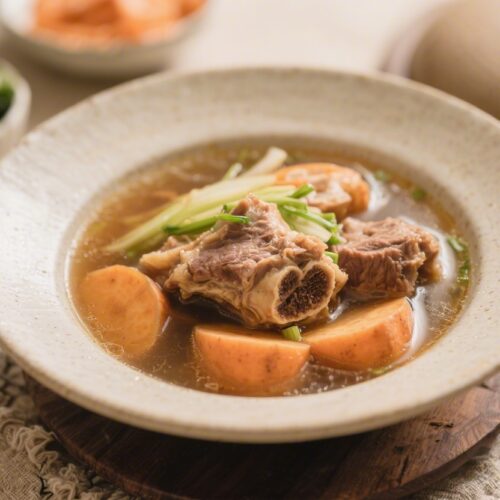
Warm and Comforting Korean Gamjatang (Pork Bone Soup) Recipe - A Hearty, Homey Favorite
Ingredients
- Pork neck bones or pork spine (3–4 pounds), rinsed
- Potatoes (3–4 medium, waxy or Yukon Gold), peeled and cut into large chunks
- Napa cabbage (1/2 medium head), cut into large pieces
- Perilla leaves (optional but traditional, about 10), roughly torn
- Perilla seed powder (deulkkae garu) (3–4 tablespoons)
- Gochugaru (Korean red pepper flakes, 1–2 tablespoons, to taste)
- Gochujang (1–2 tablespoons)
- Doenjang (Korean soybean paste, 1 tablespoon)
- Soy sauce (2–3 tablespoons)
- Fish sauce (1 tablespoon, optional, for depth)
- Garlic (8–10 cloves), minced
- Ginger (1-inch piece), sliced
- Green onions (4), cut into 2-inch pieces
- Onion (1 medium), quartered
- Korean radish (mu) (optional, 1/2 pound), cut into chunks
- Sesame oil (1 tablespoon)
- Salt and pepper to taste
- Water (12–14 cups)
Instructions
- Parboil the bones. Place pork bones in a large pot, cover with cold water, and bring to a rolling boil for 5–7 minutes. This pulls out impurities for a cleaner broth.
- Rinse and reset. Drain the bones. Rinse the bones under cold water and scrub off any scum. Rinse the pot too.
- Start the broth. Return bones to the pot with 12–14 cups of fresh water, the onion, ginger, and half the garlic. Bring to a boil, then lower to a steady simmer. Skim foam during the first 20 minutes.
- Simmer low and slow. Cook for 1.5–2 hours, partially covered. The broth should turn milky and the meat should loosen on the bone.
- Make the seasoning paste. In a bowl, combine gochujang, gochugaru, doenjang, soy sauce, fish sauce (if using), remaining garlic, perilla seed powder, and sesame oil. Stir into a thick paste.
- Season the broth. Remove the onion and ginger. Stir the seasoning paste into the pot until fully dissolved. Taste and adjust salt, soy sauce, or gochugaru.
- Add hearty vegetables. Add potatoes and Korean radish (if using). Simmer 15–20 minutes until just tender.
- Add greens for freshness. Stir in Napa cabbage, perilla leaves, and green onions. Simmer 5–7 minutes more, until cabbage softens but still has some bite.
- Final balance. Taste again. Add a splash of soy sauce for savoriness, a pinch of sugar if it’s too sharp, or more perilla seed powder for nuttiness. Finish with black pepper.
- Serve hot. Ladle into large bowls. Include bones and plenty of broth, potatoes, and greens. Serve with steamed white rice and extra perilla leaves if you have them.
Printable Recipe Card
Want just the essential recipe details without scrolling through the article? Get our printable recipe card with just the ingredients and instructions.