Hearty Korean Galbitang Made Simple Recipe
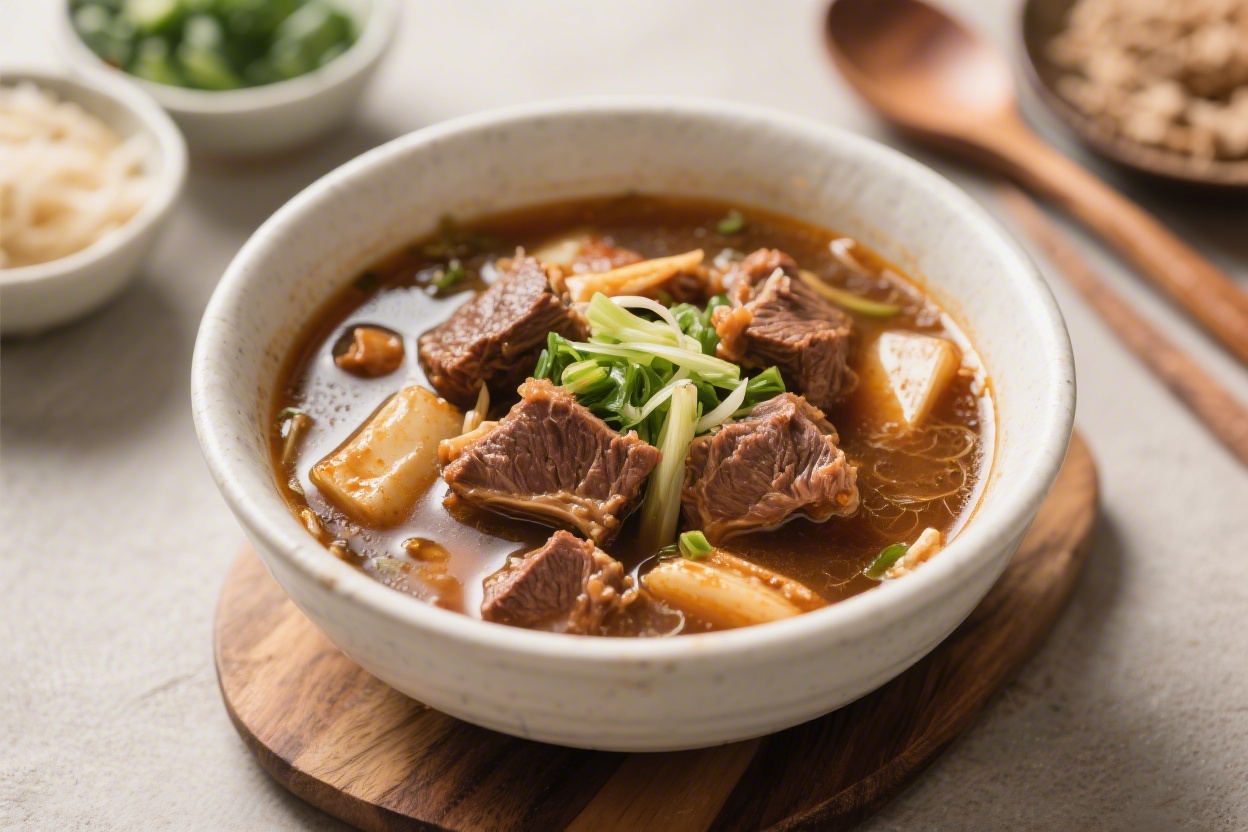
Galbitang is the kind of soup you make when you want warmth that goes straight to your bones. It’s clear, deeply beefy, and soothing without being heavy. The broth is gentle enough for a quiet evening but sturdy enough to feel like a full meal.
With a few smart steps, you can make restaurant-quality galbitang at home without fuss. This version keeps the process simple while staying true to the soul of the dish.
What Makes This Special
Galbitang is all about a clean, clear broth that still has big flavor. The short ribs slowly release richness, while aromatics round out the taste without clouding the soup.
It’s a dish that rewards patience and light seasoning. You don’t need a lot of spices or flashy ingredients. Just good beef, time, and a few pantry staples.
It’s also versatile.
Serve it plain and clear, or add noodles and rice cake slices for a heartier meal. Adjust the salt at the end, and let people season to taste at the table. That’s how it’s often enjoyed in Korean homes.
Shopping List
- Beef short ribs (English cut) – 2 to 2.5 pounds, preferably with some marbling
- Water – about 12 cups (you’ll top up as needed)
- Korean radish (mu) or daikon – 1 small, peeled and cut into large chunks
- Yellow onion – 1 medium, halved
- Garlic – 6 to 8 cloves, lightly crushed
- Ginger – 3 to 4 thin slices (optional but recommended)
- Whole black peppercorns – 1 teaspoon (or freshly cracked black pepper later)
- Scallions – 4 to 5, whites for broth and greens for garnish
- Salt – to taste (start with 2 to 3 teaspoons)
- Soy sauce – 1 to 2 tablespoons, optional for seasoning at the end
- Toasted sesame oil – 1 teaspoon, optional for serving
- Glass noodles (dangmyeon) – optional, for a heartier bowl
- Cilantro or extra scallions – optional garnish
How to Make It
- Soak and rinse the ribs. Place short ribs in a large bowl and cover with cold water for 20 to 30 minutes.This draws out excess blood and helps keep the broth clear. Drain and rinse well.
- Parboil for a clean start. Add ribs to a pot, cover with fresh cold water, and bring to a rolling boil for 5 minutes. Skim foam.Drain and rinse the ribs under warm water. Rinse the pot, too. This step is key for a clear broth.
- Build the base. Return the ribs to the clean pot.Add 10 to 12 cups of water, onion halves, garlic, ginger, peppercorns, and the white parts of 2 scallions. Bring to a boil, then reduce to a gentle simmer.
- Simmer low and slow. Cook uncovered at a gentle simmer for 1.5 to 2 hours. Skim any fat and foam as it rises.Keep the simmer steady but not vigorous to maintain clarity.
- Add the radish. After about 1 hour of simmering, add the radish chunks. Continue simmering until the ribs are very tender and the radish is easily pierced, about 30 to 45 minutes more.
- Strain aromatics. Remove onion, ginger, garlic, and peppercorns. Keep the ribs and radish in the pot.Taste the broth.
- Season thoughtfully. Add salt in small amounts until it tastes round and savory. You can add a splash of soy sauce for depth, but keep the broth light and clear. A pinch of white pepper is nice, too.
- Optional noodles. If using glass noodles, soak them in warm water until pliable.Add to the hot broth for 2 to 3 minutes just before serving. Don’t overcook.
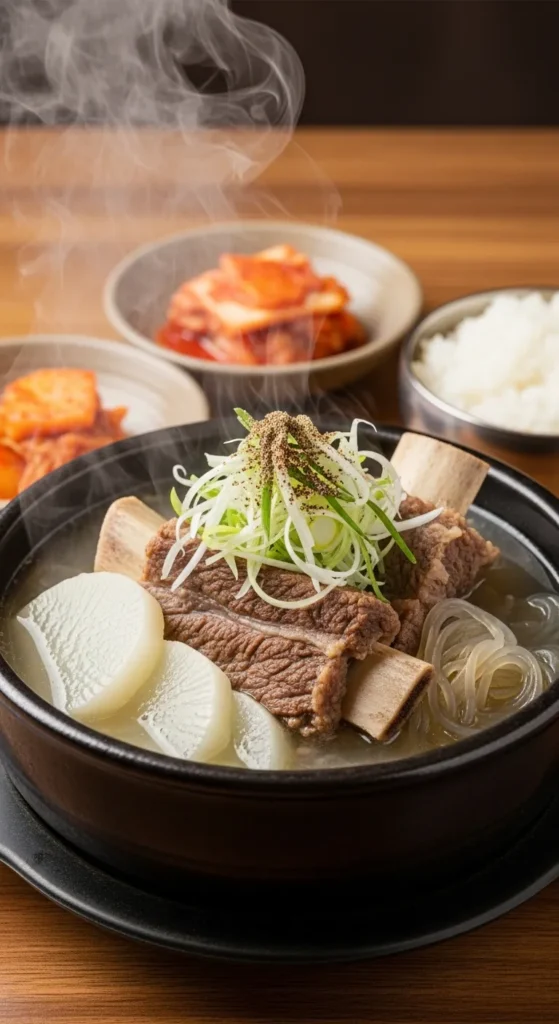
- Finish and serve. Ladle the soup into bowls with a few pieces of rib and radish. Top with sliced scallion greens and a tiny drizzle of sesame oil if you like.Serve with steamed rice and kimchi.
How to Store
- Refrigerate: Cool the soup, then store in airtight containers for up to 4 days. The flavor deepens by day two.
- Skim fat easily: Chill overnight and remove the firm layer of fat from the top before reheating for a cleaner taste.
- Freeze: Portion into freezer-safe containers for up to 3 months. Leave a little headspace for expansion.
- Reheat gently: Warm on the stove over medium heat.Add a splash of water if the broth reduced, and re-season with salt if needed.
Why This is Good for You
- Protein-rich: Beef short ribs provide satisfying protein that keeps you full.
- Mineral boost: Long simmering draws out minerals and collagen, giving the broth body without heavy cream or butter.
- Light but nourishing: The clear broth is easy on the stomach yet feels substantial, especially with radish and noodles.
- Low clutter: Minimal ingredients mean fewer additives. The flavor comes from technique, not shortcuts.
What Not to Do
- Don’t skip soaking and parboiling. You’ll end up with a cloudy, murky broth.
- Don’t boil hard. A raging boil emulsifies fat and makes the soup greasy and opaque. Keep it at a gentle simmer.
- Don’t overseason early. Salt concentrates as liquid reduces.Season at the end for balance.
- Don’t toss the radish in too soon. It will break down and disappear. Add it in the last stretch.
- Don’t crowd with too many flavors. Galbitang shines because it’s simple. Avoid heavy spices and strong herbs.
Alternatives
- Different cuts: If short ribs are pricey, use beef shank or a mix of shank and marrow bones.Expect a slightly different texture but solid flavor.
- No Korean radish? Use daikon. It’s milder but works well and holds shape.
- Broth boost: A small piece of dried kelp (kombu) added in the last 20 minutes brings gentle umami. Remove promptly to keep the broth clean.
- Gluten-free: Skip soy sauce and season only with salt, or use tamari labeled gluten-free.
- Vegetable add-ins: Sliced mushrooms or thinly cut napa cabbage can be added in the last 10 minutes for variation.
- Spicy finish: Serve with gochugaru (Korean chili flakes) or a little gochugaru oil at the table for those who want heat.
FAQ’s
How do I get the broth crystal clear?
Soak and parboil the ribs, rinse everything, and simmer gently instead of boiling.
Skim often. Clarity comes from low agitation and clean bones.
Can I make this in a slow cooker?
Yes. Parboil and rinse the ribs first, then cook in a slow cooker on low for 7 to 8 hours with aromatics and radish added in the last 2 to 3 hours.
Season at the end.
What if I don’t have Korean radish?
Daikon is the best substitute. If you can’t find either, skip it and add glass noodles or a few potato chunks near the end for body.
Is it okay to make this a day ahead?
Absolutely. The flavor improves overnight.
Chill, skim the fat, and reheat gently. Adjust salt just before serving.
How much salt should I add?
Start with 2 teaspoons and go up gradually. The right amount depends on your water, soy sauce (if using), and how much the broth reduces.
Taste, then season.
Can I use pre-cut flanken-style ribs?
You can, but English-cut ribs offer meatier pieces and a clearer broth. If using flanken, pay extra attention to skimming and reduce simmer intensity.
What sides go well with galbitang?
Steamed rice, kimchi, and simple banchan like cucumber salad or seasoned spinach are perfect. Keep sides bright and crisp to balance the rich broth.
How do I make it spicier without changing the base?
Serve with sliced fresh chili, a sprinkle of gochugaru, or a small spoonful of chili oil at the table.
That keeps the core broth clean and mild.
Related Recipes
- Easy Korean Miyeok Guk (Seaweed Soup) for Beginners – Comforting, Nutritious, and Simple
- Spicy Korean Yukgaejang (Shredded Beef Soup) Recipe – Hearty, Fiery, and Comforting
- Light and Refreshing Kongnamul Guk (Soybean Sprout Soup)
In Conclusion
Galbitang proves that simple techniques can deliver deep comfort. With clean prep, gentle simmering, and patient seasoning, you get a clear, beefy broth and tender ribs that feel like home. Keep the flavors focused, add noodles if you want, and set out rice and kimchi for a complete, soul-warming meal.
This is hearty food made easy—and it tastes even better the next day.
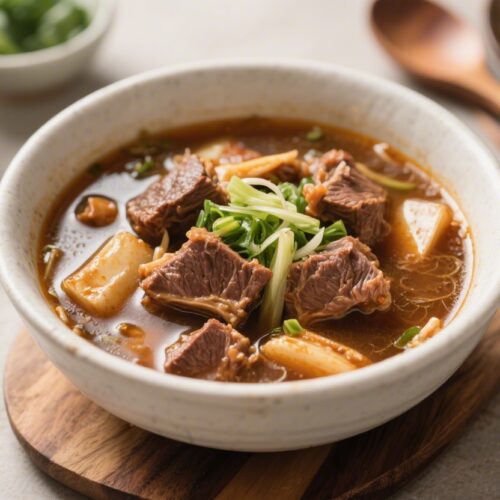
Hearty Korean Galbitang (Beef Short Rib Soup) Made Simple - Comforting, Clean, and Satisfying
Ingredients
- Beef short ribs (English cut) – 2 to 2.5 pounds, preferably with some marbling
- Water – about 12 cups (you’ll top up as needed)
- Korean radish (mu) or daikon – 1 small, peeled and cut into large chunks
- Yellow onion – 1 medium, halved
- Garlic – 6 to 8 cloves, lightly crushed
- Ginger – 3 to 4 thin slices (optional but recommended)
- Whole black peppercorns – 1 teaspoon (or freshly cracked black pepper later)
- Scallions – 4 to 5, whites for broth and greens for garnish
- Salt – to taste (start with 2 to 3 teaspoons)
- Soy sauce – 1 to 2 tablespoons, optional for seasoning at the end
- Toasted sesame oil – 1 teaspoon, optional for serving
- Glass noodles (dangmyeon) – optional, for a heartier bowl
- Cilantro or extra scallions – optional garnish
Instructions
- Soak and rinse the ribs. Place short ribs in a large bowl and cover with cold water for 20 to 30 minutes. This draws out excess blood and helps keep the broth clear. Drain and rinse well.
- Parboil for a clean start. Add ribs to a pot, cover with fresh cold water, and bring to a rolling boil for 5 minutes. Skim foam. Drain and rinse the ribs under warm water. Rinse the pot, too. This step is key for a clear broth.
- Build the base. Return the ribs to the clean pot. Add 10 to 12 cups of water, onion halves, garlic, ginger, peppercorns, and the white parts of 2 scallions. Bring to a boil, then reduce to a gentle simmer.
- Simmer low and slow. Cook uncovered at a gentle simmer for 1.5 to 2 hours. Skim any fat and foam as it rises. Keep the simmer steady but not vigorous to maintain clarity.
- Add the radish. After about 1 hour of simmering, add the radish chunks. Continue simmering until the ribs are very tender and the radish is easily pierced, about 30 to 45 minutes more.
- Strain aromatics. Remove onion, ginger, garlic, and peppercorns. Keep the ribs and radish in the pot. Taste the broth.
- Season thoughtfully. Add salt in small amounts until it tastes round and savory. You can add a splash of soy sauce for depth, but keep the broth light and clear. A pinch of white pepper is nice, too.
- Optional noodles. If using glass noodles, soak them in warm water until pliable. Add to the hot broth for 2 to 3 minutes just before serving. Don’t overcook.
- Finish and serve. Ladle the soup into bowls with a few pieces of rib and radish. Top with sliced scallion greens and a tiny drizzle of sesame oil if you like. Serve with steamed rice and kimchi.
Printable Recipe Card
Want just the essential recipe details without scrolling through the article? Get our printable recipe card with just the ingredients and instructions.