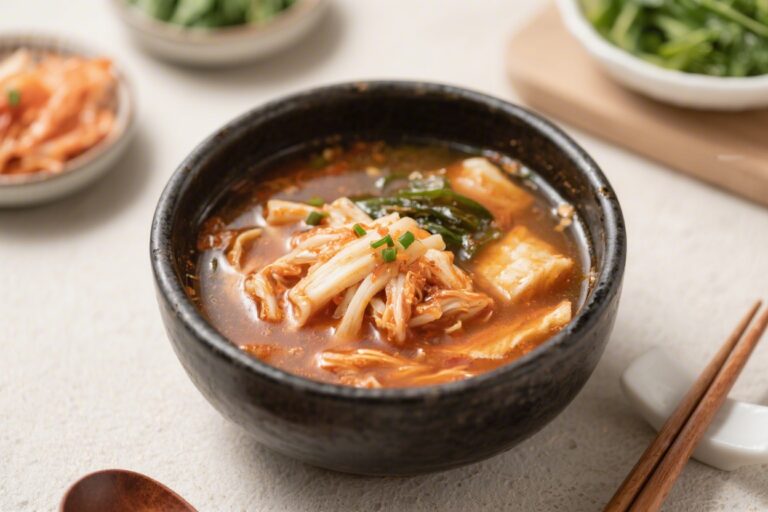
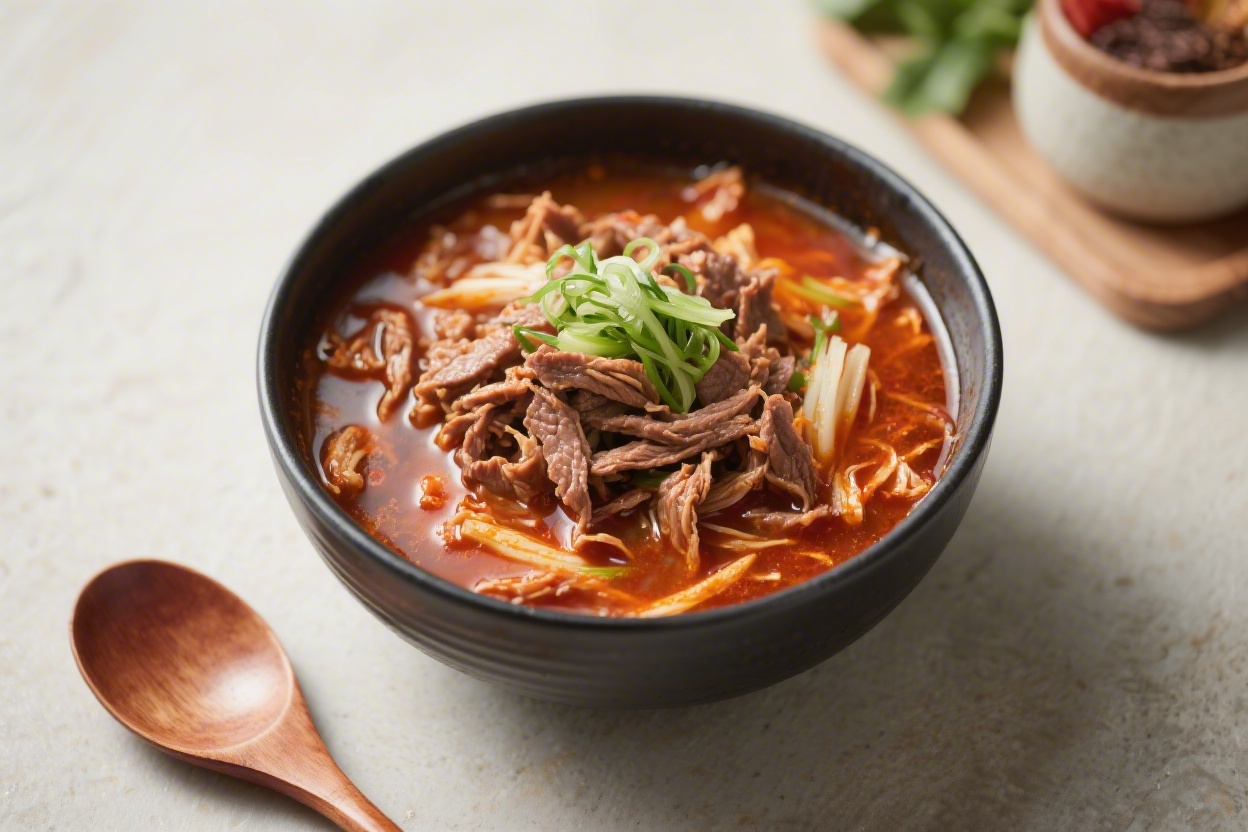
Spicy Korean Yukgaejang Recipe
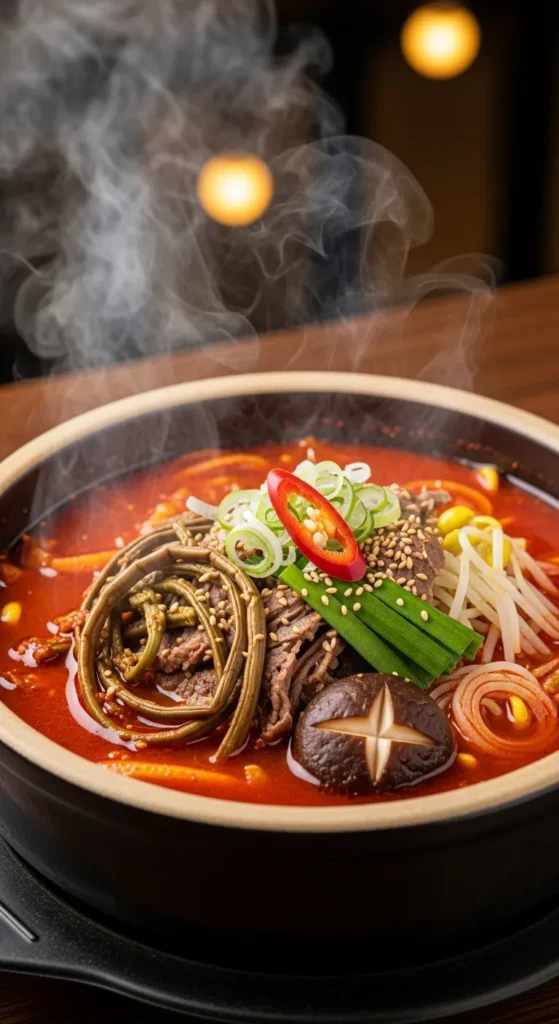
Yukgaejang is the kind of soup that warms you from the inside out. It’s bold, red, and deeply savory, with tender shreds of beef, earthy mushrooms, silky eggs, and a satisfying kick of heat. If you love comforting soups with a spicy edge, this one’s for you.
It’s a classic Korean dish that tastes like it simmered all day, but it’s easy to make at home with a few key ingredients. Serve it with rice and kimchi, and you’ve got a complete meal that hits every craving.
Why This Recipe Works
This version keeps the core flavors of traditional yukgaejang—beef, chili, and aromatics—while streamlining a few steps. Simmering beef shank or brisket gently builds a rich broth and gives you meat that shreds beautifully.
Toasting Korean chili flakes (gochugaru) in oil with garlic and scallions releases a deep, smoky heat without harsh bitterness. Bean sprouts, fernbrake (gosari) or spinach, bellflower root (doraji) if you have it, and mushrooms add great texture and balance. A light egg ribbon and a last splash of sesame oil make the soup silky and fragrant.
What You’ll Need
- Beef: 1.5–2 pounds beef shank, brisket, or chuck (shank is traditional and shreds well)
- Water or Broth: 10 cups water (or low-sodium beef stock for extra richness)
- Aromatics: 1 large yellow onion (halved), 6 cloves garlic (smashed), 1 thumb-sized piece ginger (sliced), 2 scallions (white parts for broth)
- Korean Chili Flakes (Gochugaru): 3–5 tablespoons, to taste
- Korean Chili Paste (Gochujang): 1–2 tablespoons (optional, for body and sweetness)
- Light Soy Sauce: 3 tablespoons (or Korean soup soy sauce, guk-ganjang, if available)
- Fish Sauce: 1 tablespoon (adds depth; optional but recommended)
- Sesame Oil: 2 tablespoons
- Neutral Oil: 2 tablespoons (vegetable or canola)
- Vegetables:
- 2 cups mung bean sprouts, rinsed
- 2 cups fernbrake (gosari), soaked and pre-boiled if dried (or substitute 3 cups fresh spinach)
- 1–2 cups mushrooms (shiitake, oyster, or enoki), sliced
- 4–5 scallions, cut into 2-inch pieces
- Eggs: 2 large, lightly beaten
- Salt and Pepper: To taste
- Optional add-ins: 1 teaspoon sugar (if you like a hint of sweetness), dash of black pepper, extra gochugaru for serving
- To serve: Steamed white rice, kimchi, and toasted gim (seaweed) if you like
Instructions
- Simmer the beef: Place the beef, onion, garlic, ginger, and the white parts of 2 scallions in a large pot.Add 10 cups of water. Bring to a boil, then reduce to a gentle simmer. Cook uncovered for 1.5–2 hours, skimming foam as needed, until the beef is very tender.
- Strain and shred: Remove the beef to a cutting board and let it cool slightly.Strain the broth, discard the solids, and return the clear broth to the pot. Shred the beef into bite-sized strands with forks or by hand.
- Make the chili oil base: In a skillet, heat neutral oil over medium. Add gochugaru and stir for 30–45 seconds until fragrant and brick-red.Add minced garlic (2 extra cloves if you like), a drizzle of sesame oil, and the scallion pieces. Cook 1 minute more. Do not let the chili burn.
- Build the soup: Stir the chili oil mixture into the broth.Add soy sauce, fish sauce, and gochujang (if using). Bring to a simmer and taste. Adjust salt and heat by adding more soy or gochugaru as needed.
- Add vegetables and beef: Add shredded beef, bean sprouts, mushrooms, and gosari (or spinach if substituting).Simmer 8–10 minutes until the vegetables are tender but still have some bite.
- Finish with eggs and sesame oil: Lower the heat so the soup is gently bubbling. Create a small whirlpool with a spoon and slowly drizzle in beaten eggs in a thin stream to form ribbons. Turn off heat.Add remaining sesame oil and a few cracks of black pepper.
- Serve: Ladle into bowls. Top with extra scallions and a sprinkle of gochugaru if you want more kick. Serve hot with steamed rice and kimchi.
How to Store
- Refrigerate: Cool completely, then store in airtight containers for up to 4 days.The flavors deepen by day two.
- Freeze: Freeze in quart containers for up to 2 months. Leave a little headspace for expansion. Thaw overnight in the fridge.
- Reheat: Warm gently on the stove over medium heat.Add a splash of water or stock if it’s too concentrated. Freshen with a dash of soy sauce and a drizzle of sesame oil before serving.
Why This is Good for You
- Protein-rich: Shredded beef provides sustained energy and helps keep you full.
- Vegetable variety: Bean sprouts, mushrooms, and greens add fiber, minerals, and antioxidants.
- Warming spices: Gochugaru brings capsaicin, which may support metabolism and clear sinuses.
- Balanced meal: Pairing the soup with rice gives you a satisfying mix of protein, carbs, and micronutrients.
What Not to Do
- Don’t boil the eggs hard: Pour in the eggs at a gentle simmer, not a rolling boil, or they’ll clump instead of forming silky ribbons.
- Don’t skip skimming: Skim the broth during the initial simmer. It keeps the flavor clean and the color bright.
- Don’t burn the chili: Overheating gochugaru turns it bitter.Keep the heat moderate when making the chili oil.
- Don’t overseason early: Salt intensifies as the soup reduces. Season gradually and taste near the end.
- Don’t use very lean cuts: You want some connective tissue for body and tenderness. Brisket or shank beats sirloin here.
Variations You Can Try
- Chicken Yukgaejang: Use bone-in chicken thighs or a whole chicken.Simmer, shred, and proceed with the same seasonings.
- Milder Version: Reduce gochugaru to 1–2 tablespoons and skip gochujang. Add a touch more soy for balance.
- Extra Hearty: Add soaked glass noodles (dangmyeon) during the last 5–6 minutes of simmering.
- Vegetable-Forward:</-strong> Double the mushrooms, add zucchini slices, and use vegetable stock with tofu cubes instead of beef.
- Smoother Body: Stir in a ladle of the hot broth into the gochujang to thin it before adding, for seamless blending.
- Herbal Lift: Add a few slices of fresh fernbrake or bellflower root if you can find them at a Korean market for classic texture and aroma.
FAQ’s
Can I make yukgaejang in a pressure cooker?
Yes. Cook the beef, onion, garlic, ginger, and water on high pressure for 45 minutes, then natural release for 15 minutes.
Strain, shred the beef, and finish the soup on the stovetop with the chili oil, vegetables, and eggs.
What can I use if I can’t find gochugaru?
For the closest flavor, use a mix of mild paprika and a bit of Korean chili powder if available. If not, blend sweet paprika with a small amount of cayenne. Start with less cayenne and add to taste.
Avoid smoked paprika as it can overpower the soup’s flavor.
Is gochujang necessary?
No, but it adds gentle sweetness and thickness. If you skip it, add a pinch of sugar and a bit more soy sauce for balance.
How spicy is this?
Medium-hot as written, but easily adjustable. Use 3 tablespoons gochugaru for moderate heat, 5 for a robust kick.
For milder soup, start with 1–2 tablespoons.
What side dishes go well with yukgaejang?
Steamed white rice, napa kimchi, cucumber kimchi, and simple banchan like seasoned spinach or soy-braised potatoes are perfect. The soup is bold, so keep sides straightforward.
Can I make it ahead?
Absolutely. Yukgaejang tastes even better the next day as the flavors meld.
Reheat gently and refresh with a splash of sesame oil before serving.
What cut of beef is best?
Beef shank is traditional for its collagen and shreddability. Brisket or chuck also work well. Avoid very lean cuts, which can turn stringy and dry.
Can I skip the eggs?
Yes.
The eggs add silkiness but aren’t essential. The soup will still be rich and satisfying without them.
Related Recipes
- Easy Korean Miyeok Guk (Seaweed Soup) for Beginners – Comforting, Nutritious, and Simple
- Hearty Korean Galbitang (Beef Short Rib Soup) Made Simple – Comforting, Clean, and Satisfying
- Light and Refreshing Kongnamul Guk (Soybean Sprout Soup)
Final Thoughts
Spicy Korean yukgaejang brings together deep beefy broth, smoky chili heat, and crunchy-tender vegetables in one comforting bowl. It’s a straightforward recipe with big payoff, and most of the work is hands-off simmering.
Once you try it at home, you’ll see why it’s a favorite on chilly nights—or any time you’re craving a bold, revitalizing soup. Keep rice and kimchi nearby, adjust the spice to your taste, and enjoy every warming spoonful.
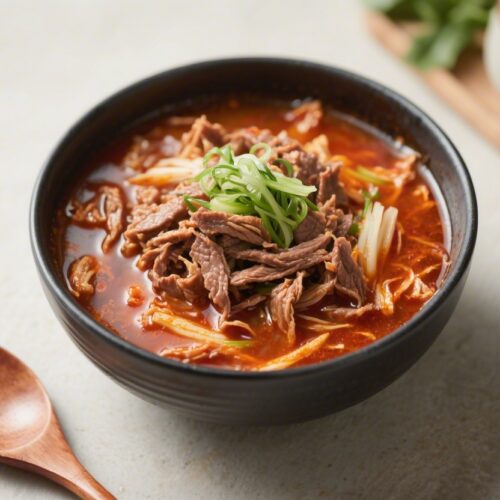
Spicy Korean Yukgaejang (Shredded Beef Soup) Recipe - Hearty, Fiery, and Comforting
Ingredients
- Beef: 1.5–2 pounds beef shank, brisket, or chuck (shank is traditional and shreds well)
- Water or Broth: 10 cups water (or low-sodium beef stock for extra richness)
- Aromatics: 1 large yellow onion (halved), 6 cloves garlic (smashed), 1 thumb-sized piece ginger (sliced), 2 scallions (white parts for broth)
- Korean Chili Flakes (Gochugaru): 3–5 tablespoons, to taste
- Korean Chili Paste (Gochujang): 1–2 tablespoons (optional, for body and sweetness)
- Light Soy Sauce: 3 tablespoons (or Korean soup soy sauce, guk-ganjang, if available)
- Fish Sauce: 1 tablespoon (adds depth; optional but recommended)
- Sesame Oil: 2 tablespoons
- Neutral Oil: 2 tablespoons (vegetable or canola)
- Vegetables: 2 cups mung bean sprouts, rinsed
- 2 cups fernbrake (gosari), soaked and pre-boiled if dried (or substitute 3 cups fresh spinach)
- 1–2 cups mushrooms (shiitake, oyster, or enoki), sliced
- 4–5 scallions, cut into 2-inch pieces
- Eggs: 2 large, lightly beaten
- Salt and Pepper: To taste
- Optional add-ins: 1 teaspoon sugar (if you like a hint of sweetness), dash of black pepper, extra gochugaru for serving
- To serve: Steamed white rice, kimchi, and toasted gim (seaweed) if you like
Instructions
- Simmer the beef: Place the beef, onion, garlic, ginger, and the white parts of 2 scallions in a large pot. Add 10 cups of water. Bring to a boil, then reduce to a gentle simmer. Cook uncovered for 1.5–2 hours, skimming foam as needed, until the beef is very tender.
- Strain and shred: Remove the beef to a cutting board and let it cool slightly. Strain the broth, discard the solids, and return the clear broth to the pot. Shred the beef into bite-sized strands with forks or by hand.
- Make the chili oil base: In a skillet, heat neutral oil over medium. Add gochugaru and stir for 30–45 seconds until fragrant and brick-red. Add minced garlic (2 extra cloves if you like), a drizzle of sesame oil, and the scallion pieces. Cook 1 minute more. Do not let the chili burn.
- Build the soup: Stir the chili oil mixture into the broth. Add soy sauce, fish sauce, and gochujang (if using). Bring to a simmer and taste. Adjust salt and heat by adding more soy or gochugaru as needed.
- Add vegetables and beef: Add shredded beef, bean sprouts, mushrooms, and gosari (or spinach if substituting). Simmer 8–10 minutes until the vegetables are tender but still have some bite.
- Finish with eggs and sesame oil: Lower the heat so the soup is gently bubbling. Create a small whirlpool with a spoon and slowly drizzle in beaten eggs in a thin stream to form ribbons. Turn off heat. Add remaining sesame oil and a few cracks of black pepper.
- Serve: Ladle into bowls. Top with extra scallions and a sprinkle of gochugaru if you want more kick. Serve hot with steamed rice and kimchi.
Printable Recipe Card
Want just the essential recipe details without scrolling through the article? Get our printable recipe card with just the ingredients and instructions.