
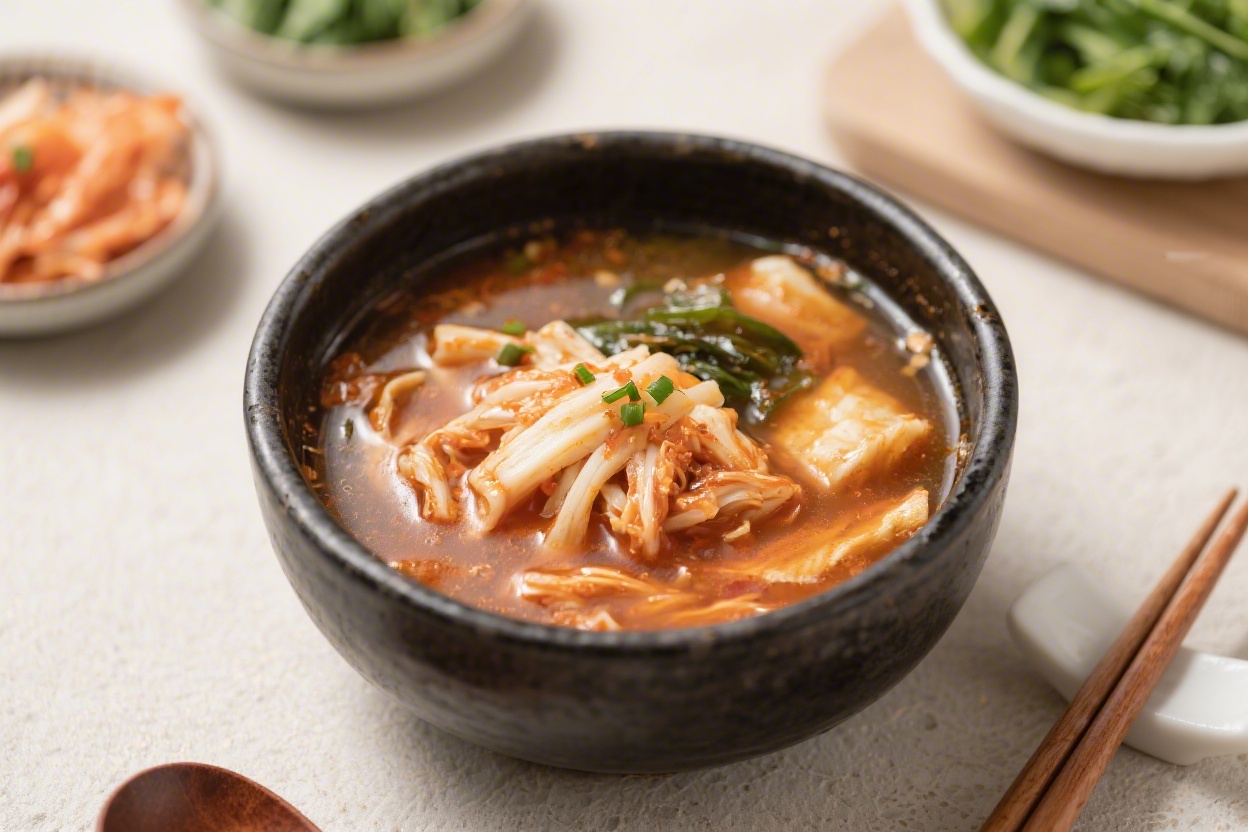
Korean Soup Recipe – A Cozy, Flavor-Packed Classic
Korean soup is the kind of meal that feels like a warm hug. It’s soothing, full of bold flavor, and surprisingly easy to put together. This version leans on pantry-friendly ingredients like gochujang and gochugaru, along with tofu, mushrooms, and vegetables.
You get a balance of savory, spicy, and slightly smoky notes with a clean finish. If you’re craving something comforting that still tastes fresh and exciting, this is the pot you want simmering on your stove.
What Makes This Recipe So Good
- Bold, layered flavor: Gochujang brings heat and depth, while soy sauce and sesame oil add umami and nuttiness.
- Comforting yet light: The broth is rich but not heavy—great for weeknights or when you want something easier on the stomach.
- Flexible ingredients: Use tofu, beef, or chicken. Swap veggies based on what you have.It’s very forgiving.
- Quick to cook: You can have it on the table in about 35 minutes, with minimal prep.
- Nourishing: Protein from tofu or meat, plenty of veggies, and a broth that feels restorative.
What You’ll Need
- 1 tablespoon neutral oil (like canola or avocado)
- 1 small onion, thinly sliced
- 3 cloves garlic, minced
- 1 teaspoon ginger, minced or grated
- 6 cups low-sodium chicken or vegetable broth (or anchovy-kelp stock for extra authenticity)
- 2 tablespoons gochujang (Korean red pepper paste)
- 1–2 teaspoons gochugaru (Korean red pepper flakes), to taste
- 2 tablespoons soy sauce (plus more to adjust)
- 1 teaspoon toasted sesame oil
- 7–8 ounces firm or soft tofu, cut into cubes
- 1 cup mushrooms (shiitake, oyster, or button), sliced
- 1 small zucchini, halved lengthwise and sliced
- 1 medium potato, peeled and thinly sliced (optional, for heartiness)
- 2 green onions, sliced (whites for cooking, greens for garnish)
- 1 teaspoon sugar or honey (optional, to balance heat)
- Salt and black pepper, to taste
- 1 egg (optional, for finishing)
- Kimchi, roughly chopped (optional but highly recommended, 1/2 to 1 cup)
- Protein options (choose one, optional): 6 ounces thinly sliced beef, pork belly, chicken thigh, or shrimp
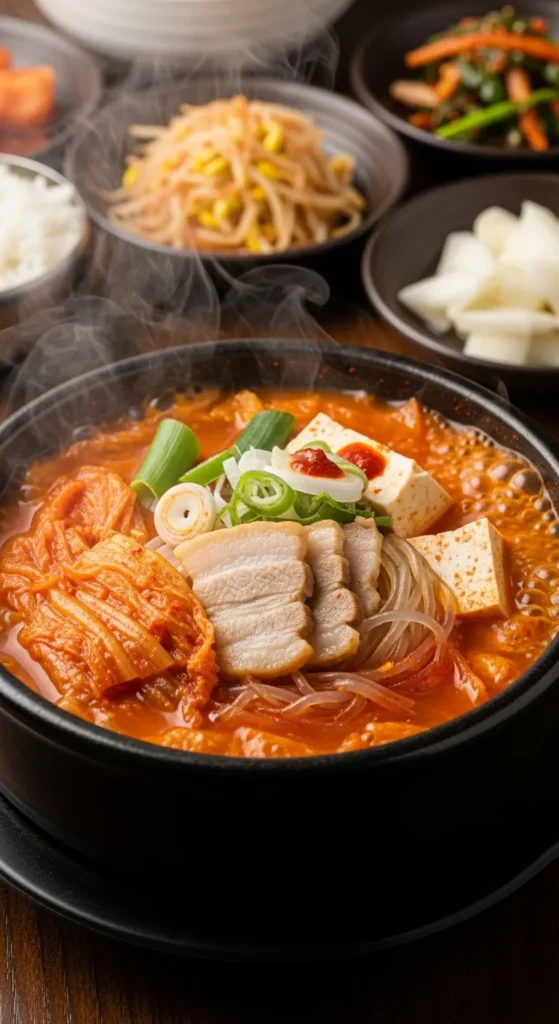
How to Make It
- Sweat the aromatics: Heat the oil in a heavy pot over medium heat. Add onion and a pinch of salt. Cook 3–4 minutes until translucent.Stir in garlic and ginger; cook 30 seconds until fragrant.
- Build the base: Add gochujang and gochugaru. Stir for 30–45 seconds to bloom the chili paste and flakes. This step deepens the flavor.
- Deglaze and simmer: Pour in the broth, scraping up any browned bits.Add soy sauce and the white parts of the green onion. If using potato, add it now. Bring to a gentle boil, then lower to a simmer for 8–10 minutes.
- Add veggies and tofu: Stir in mushrooms, zucchini, and tofu cubes.If using kimchi, add it now along with a spoonful of kimchi juice for tang. Simmer 6–8 minutes until vegetables are tender.
- Add protein (if using): Slip in thinly sliced beef, pork, chicken, or shrimp. Simmer just until cooked through.Keep it gentle—overcooking will toughen the meat.
- Season and balance: Taste the broth. Add sesame oil, a pinch of sugar or honey if it feels too sharp, and more soy sauce or salt if needed. Adjust heat with additional gochugaru.
- Finish with an egg (optional): Crack an egg directly into the simmering soup and poach for 2–3 minutes, or whisk an egg and drizzle it in for silky ribbons.
- Garnish and serve: Ladle into bowls and top with the green onion tops.Serve with hot steamed rice and extra kimchi on the side.
Keeping It Fresh
- Refrigerate: Cool completely, then store in an airtight container for up to 4 days.
- Reheat gently: Warm on the stove over low to medium heat to avoid breaking up the tofu. Add a splash of water if the broth reduced.
- Freeze tips: Freeze the broth and veggies without tofu for the best texture (up to 2 months). Add fresh tofu when reheating.
- Meal prep: Keep rice and soup separate so the rice doesn’t soak up all the liquid.
Benefits of This Recipe
- Customizable nutrition: Choose lean protein, load up on vegetables, or keep it plant-based with tofu and veggie stock.
- Gut-friendly options: Adding kimchi gives you fermented goodness and bright acidity.
- Hydrating and satisfying: A brothy bowl that still delivers fullness thanks to tofu, potatoes, or meat.
- Great for batch cooking: Easy to scale and reheats well for quick lunches.
What Not to Do
- Don’t skip blooming the gochujang: Heating it in oil unlocks serious depth.Adding it straight to broth dulls the flavor.
- Don’t boil aggressively after adding tofu: A hard boil can cause it to crumble and turn grainy.
- Don’t overseason early: The flavors concentrate as it simmers. Taste and adjust at the end.
- Don’t overcook the protein: Thin slices cook in minutes. Pull it as soon as it’s just done.
Alternatives
- Milder broth: Reduce gochugaru or skip it, keeping only a small amount of gochujang.Add a bit more soy sauce for balance.
- Seafood twist: Use shrimp, clams, or mussels, and swap in a light seafood or anchovy-kelp stock.
- Miso swap: Add a spoonful of white miso at the end for extra umami if you’re low on gochujang. Stir off heat to keep it smooth.
- No tofu? Use soft-poached eggs or thin omelet ribbons for protein.
- Low-carb version: Skip the potato and serve with cauliflower rice or extra zucchini.
- Hearty stew style: Add more potato and mushrooms, and reduce broth by 1 cup for a thicker, stew-like bowl.
FAQ’s
Can I make this soup vegetarian or vegan?
Yes. Use vegetable or kelp stock, skip meat, and rely on tofu for protein.
Check your gochujang label to ensure it’s vegan, as some brands include anchovy or honey.
How spicy is this soup?
It’s medium by default. Dial the heat up or down by adjusting the gochugaru. Gochujang also varies by brand, so taste as you go.
What’s the best tofu for this?
Soft or medium-firm tofu is classic and silky.
If you prefer chunkier pieces that hold up to stirring, use firm tofu.
Can I use a different kind of broth?
Absolutely. Chicken, vegetable, or anchovy-kelp stock all work. Anchovy-kelp is most traditional and brings deep savoriness without meat.
What should I serve with it?
Steamed short-grain rice, kimchi, and a simple cucumber salad pair beautifully.
The rice soaks up the broth and balances the heat.
How do I make anchovy-kelp stock?
Simmer 8–10 dried anchovies (heads and guts removed) and a piece of dried kelp (kombu) in 6 cups of water for 10–15 minutes. Remove solids and use the stock right away.
Can I add noodles?
Yes. Cook ramen, glass noodles, or udon separately, then add to bowls before ladling in the soup.
This keeps the broth clear and prevents sogginess.
How can I make it more tangy?
Stir in chopped kimchi and a tablespoon or two of kimchi juice. You can also add a splash of rice vinegar at the end for brightness.
Related Recipes
- Quick Keto Bread Rolls – Soft, Savory, and Ready in Minutes
- Instant Pot Soups Ready in a Flash – Cozy Bowls Without the Wait
- Honey Garlic Butter Baked Salmon – Simple, Flavorful, and Weeknight-Friendly
Final Thoughts
This Korean soup recipe is the kind of dish you’ll return to over and over. It’s simple, adaptable, and full of honest, satisfying flavor.
Keep the basics on hand—gochujang, gochugaru, soy sauce, and broth—and you can whip up a cozy pot whenever the craving hits. Serve it with hot rice, pass the kimchi, and enjoy every comforting spoonful.
Korean Soup Recipe - A Cozy, Flavor-Packed Classic
Ingredients
- 1 tablespoon neutral oil (like canola or avocado)
- 1 small onion, thinly sliced
- 3 cloves garlic, minced
- 1 teaspoon ginger, minced or grated
- 6 cups low-sodium chicken or vegetable broth (or anchovy-kelp stock for extra authenticity)
- 2 tablespoons gochujang (Korean red pepper paste)
- 1–2 teaspoons gochugaru (Korean red pepper flakes), to taste
- 2 tablespoons soy sauce (plus more to adjust)
- 1 teaspoon toasted sesame oil
- 7–8 ounces firm or soft tofu, cut into cubes
- 1 cup mushrooms (shiitake, oyster, or button), sliced
- 1 small zucchini, halved lengthwise and sliced
- 1 medium potato, peeled and thinly sliced (optional, for heartiness)
- 2 green onions, sliced (whites for cooking, greens for garnish)
- 1 teaspoon sugar or honey (optional, to balance heat)
- Salt and black pepper, to taste
- 1 egg (optional, for finishing)
- Kimchi, roughly chopped (optional but highly recommended, 1/2 to 1 cup)
- Protein options (choose one, optional): 6 ounces thinly sliced beef, pork belly, chicken thigh, or shrimp
Instructions
- Sweat the aromatics: Heat the oil in a heavy pot over medium heat. Add onion and a pinch of salt. Cook 3–4 minutes until translucent. Stir in garlic and ginger; cook 30 seconds until fragrant.
- Build the base: Add gochujang and gochugaru. Stir for 30–45 seconds to bloom the chili paste and flakes. This step deepens the flavor.
- Deglaze and simmer: Pour in the broth, scraping up any browned bits. Add soy sauce and the white parts of the green onion. If using potato, add it now. Bring to a gentle boil, then lower to a simmer for 8–10 minutes.
- Add veggies and tofu: Stir in mushrooms, zucchini, and tofu cubes. If using kimchi, add it now along with a spoonful of kimchi juice for tang. Simmer 6–8 minutes until vegetables are tender.
- Add protein (if using): Slip in thinly sliced beef, pork, chicken, or shrimp. Simmer just until cooked through. Keep it gentle—overcooking will toughen the meat.
- Season and balance: Taste the broth. Add sesame oil, a pinch of sugar or honey if it feels too sharp, and more soy sauce or salt if needed. Adjust heat with additional gochugaru.
- Finish with an egg (optional): Crack an egg directly into the simmering soup and poach for 2–3 minutes, or whisk an egg and drizzle it in for silky ribbons.
- Garnish and serve: Ladle into bowls and top with the green onion tops. Serve with hot steamed rice and extra kimchi on the side.
Printable Recipe Card
Want just the essential recipe details without scrolling through the article? Get our printable recipe card with just the ingredients and instructions.