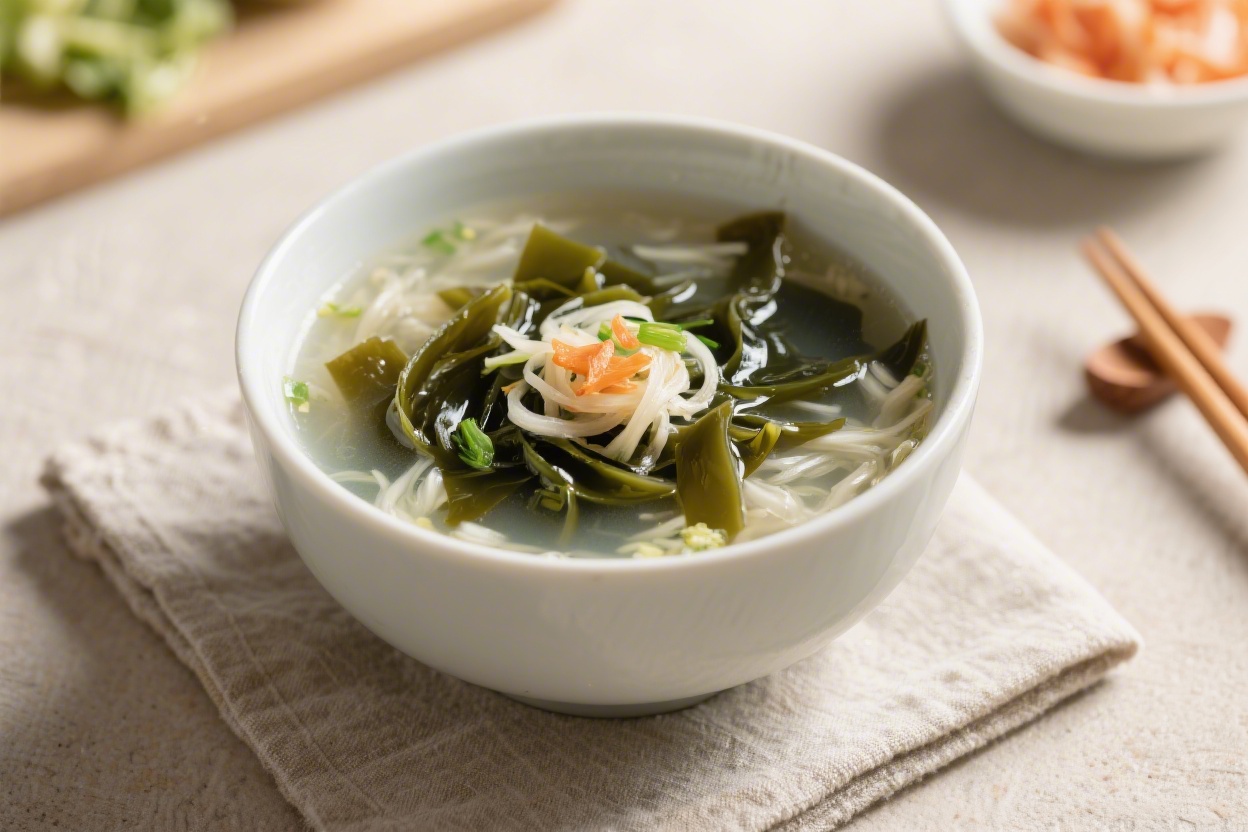
Easy Korean Miyeok Guk for Beginners Recipe
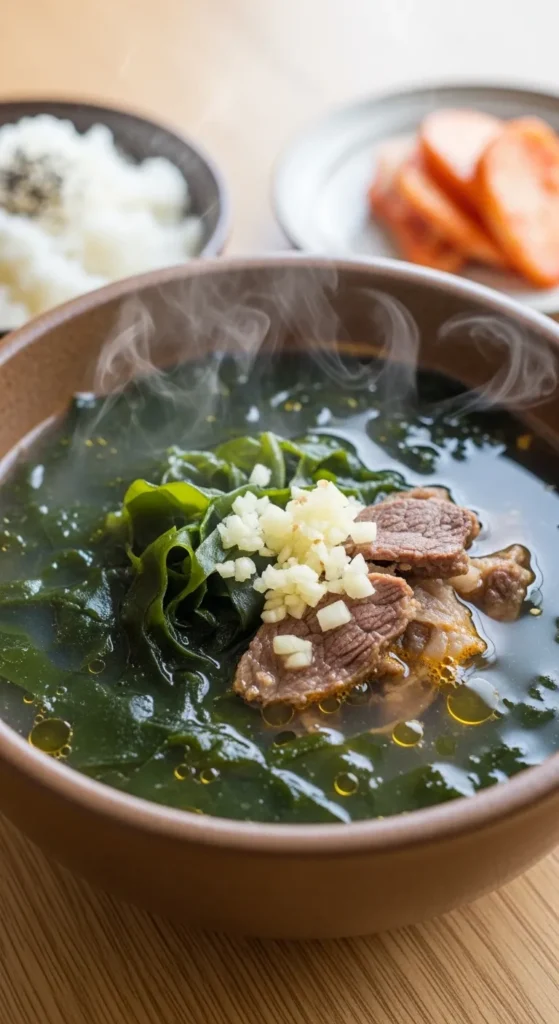
Miyeok guk is one of those cozy, quietly restorative soups you make when you want something warm, nourishing, and low-effort. In Korea, it’s the classic birthday soup and a go-to for new moms, but it’s just as great for everyday meals. This beginner-friendly version keeps things simple while still tasting authentic.
You’ll use dried seaweed, a clean broth, and a few pantry staples to get deep flavor in under 40 minutes. Whether you’re new to Korean cooking or just craving something soothing, this is a recipe you’ll make on repeat.
What Makes This Special
Miyeok guk is all about balance—clean, briny seaweed with a savory, lightly beefy or ocean-scented broth. It’s not heavy or spicy, just deeply satisfying.
The base seasoning is minimal, so the seaweed and broth shine.
- Beginner-friendly: Short ingredient list, straightforward steps, and flexible timing.
- Customizable: Make it with beef, mussels, clams, or keep it vegetarian.
- Nutrient-dense: Seaweed is rich in iodine, calcium, iron, and fiber.
- Comfort food: Gentle on the stomach and great for colder days or when you need a reset.
Ingredients
- Dried miyeok (wakame) seaweed: 1 ounce (about 30 g), dried; expands a lot
- Beef (optional): 4–6 ounces (115–170 g) thinly sliced brisket or stew beef, cut bite-size
- Sesame oil: 1 tablespoon
- Garlic: 3 cloves, minced
- Soy sauce: 1–1.5 tablespoons (Korean soup soy sauce if you have it; regular low-sodium soy sauce works)
- Salt: To taste
- Water or stock: 6 cups; use water, light beef stock, or anchovy-kelp broth
- Optional umami boosters: 1 teaspoon fish sauce, or 1 teaspoon doenjang (Korean soybean paste), or a small piece of kelp (dashima) removed before boiling
- Optional garnish: Sliced scallions, extra sesame oil, or roasted sesame seeds
How to Make It
- Soak the seaweed: Place the dried miyeok in a large bowl and cover with plenty of cold water. Let it sit for 10–15 minutes until it’s soft and expanded. Drain, rinse, and roughly chop into bite-size pieces.You’ll have about 3–4 cups.
- Prep the beef (if using): Pat it dry and season lightly with a pinch of salt. This helps it brown and seasons the broth later.
- Heat the pot: In a medium pot, add the sesame oil over medium heat. Add the soaked seaweed and stir for 2–3 minutes.This step builds flavor and gives the soup its signature aroma.
- Add beef and garlic: Stir in the beef and garlic. Cook for 1–2 minutes until the beef loses most of its pink color. Don’t worry about fully cooking it yet.
- Season the base: Add 1 tablespoon soy sauce and stir to coat the seaweed and beef.If using doenjang, add it now and mash it into the mixture so it dissolves smoothly.
- Pour in liquid: Add 6 cups of water or stock. If you’re using a small piece of kelp, add it now and remove just as the soup reaches a gentle simmer.
- Simmer gently: Bring to a simmer, then lower the heat. Cook for 20–25 minutes.The seaweed should be tender, and the broth should taste savory and clean.
- Adjust seasoning: Taste and add more soy sauce or salt as needed. If you like a hint of depth, add a teaspoon of fish sauce. Finish with a drizzle of sesame oil if you prefer a richer aroma.
- Serve hot: Ladle into bowls and garnish with scallions or sesame seeds.Serve with steamed rice and a few banchan (side dishes) if you have them.
Keeping It Fresh
- Storage: Cool completely, then refrigerate in a sealed container for up to 3–4 days.
- Reheating: Warm over low heat on the stove. Add a splash of water if it’s too concentrated. Taste and re-adjust seasoning after reheating.
- Freezing: Freezes well for up to 2 months.Portion into freezer-safe containers. Thaw overnight in the fridge before reheating.
- Make-ahead tip: Keep cooked beef or shellfish separate if you plan to store for several days. Add to the soup when reheating to keep textures tender.
Benefits of This Recipe
- Nutritional boost: Seaweed provides iodine for thyroid health, plus iron, calcium, magnesium, and fiber.
- Light but satisfying: Clear broth, minimal fat, and gentle seasoning make it easy on digestion.
- Quick pantry meal: Dried seaweed stores well and hydrates fast, so you can make this anytime.
- Balanced flavor: Sesame, soy, and garlic enhance the natural taste of seaweed without overpowering it.
What Not to Do
- Don’t skip soaking the seaweed: Dry pieces must fully rehydrate or they’ll stay tough and salty.
- Don’t boil aggressively: A rolling boil can make the broth murky and beef tough.Keep it at a gentle simmer.
- Don’t over-salt early: Seaweed, soy sauce, and fish sauce all add salt. Season gradually and taste near the end.
- Don’t use strong, heavy stock: Overly rich beef or chicken stock can drown out the clean seaweed flavor. Light stock or water is best.
- Don’t cut the seaweed too big: Bite-size pieces are easier to eat and distribute evenly in the bowl.
Variations You Can Try
- Anchovy-kelp broth: Simmer dried anchovies (heads and guts removed) and a piece of kelp in water for 10 minutes; strain.Use as your soup base for a briny, classic taste.
- Seafood version: Add mussels, clams, or shrimp during the last 5–7 minutes of simmering. Season with a touch of fish sauce.
- Vegetarian: Skip meat and use kelp- or mushroom-based broth. A small spoon of doenjang adds depth.
- Ginger note: A few thin slices of ginger in the simmer add a fresh, clean edge (especially good with seafood).
- Tofu add-in: Gently add medium-firm tofu cubes in the last 5 minutes for protein without heaviness.
- Spice it up (non-traditional): A pinch of gochugaru at the table for a mild kick, if you like heat.
FAQ’s
What kind of seaweed should I buy?
Look for packages labeled “miyeok” or “wakame,” typically sold dried.
Avoid seasoned seaweed snacks; those are for munching, not soup. Dried miyeok expands several times its size, so you need far less than you think.
Can I make it without beef?
Yes. Use water, anchovy-kelp broth, or a light vegetable stock.
For protein, add tofu or a handful of shellfish near the end. Season with soy sauce, salt, and a touch of fish sauce (optional) for balance.
Why is my soup bitter or too strong?
Overcooking kelp in the pot or using a very concentrated stock can make the flavor harsh. If you add kelp for umami, remove it before the soup boils hard.
Also, avoid long, aggressive boiling and taste as you go.
Can I use regular soy sauce instead of Korean soup soy sauce?
Yes. Use low-sodium regular soy sauce and adjust salt at the end. Korean soup soy sauce is lighter and saltier, so if you use regular soy, start with less and build up to taste.
How do I know when the seaweed is done?
It should be tender with a soft bite, not stringy or rubbery.
After 20–25 minutes of gentle simmering, taste a piece. If it’s still chewy, give it another 5 minutes.
Is miyeok guk safe to eat often?
For most people, yes, but seaweed is high in iodine. If you have thyroid concerns or are sensitive to iodine, enjoy it in moderation and consult your healthcare provider if unsure.
What should I serve with it?
Steamed white rice is classic.
Add simple sides like kimchi, cucumber salad, or sautéed spinach. The soup is mild, so tangy or spicy banchan pair well.
Can I double the recipe?
Absolutely. Use a larger pot and keep the seaweed-to-liquid ratio similar.
Season carefully as scaling up makes it easy to over-salt—taste before adding more soy sauce or salt.
My soup looks cloudy—did I do something wrong?
Not necessarily. A little cloudiness often comes from stirring or boiling too hard. It won’t hurt the flavor.
Next time, simmer gently and avoid vigorous boiling after adding soy sauce or doenjang.
Can I add vegetables?
Keep it simple to let the seaweed flavor lead. If you want extras, add thinly sliced onions or zucchini early on, or tofu near the end. Avoid strong-flavored vegetables that overpower the broth.
Related Recipes
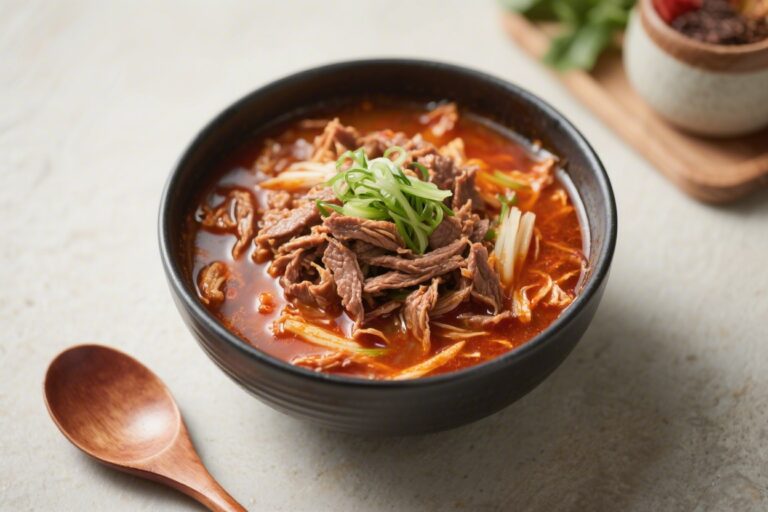
- Spicy Korean Yukgaejang (Shredded Beef Soup) Recipe – Hearty, Fiery, and Comforting
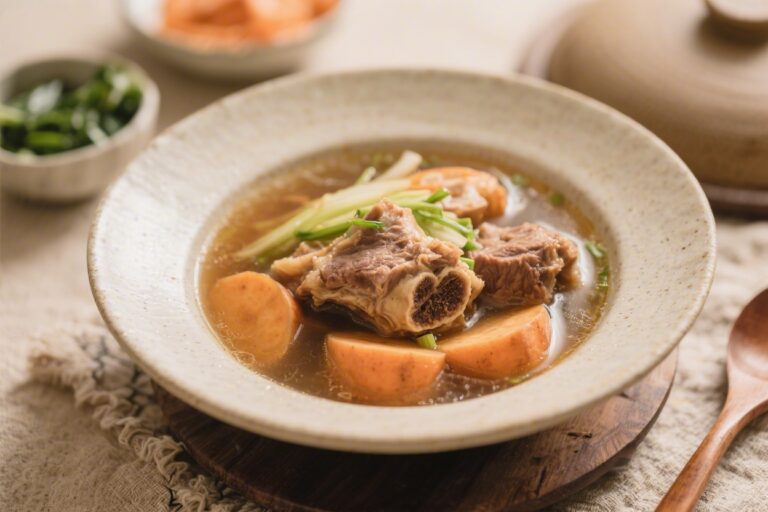
- Hearty Korean Galbitang (Beef Short Rib Soup) Made Simple – Comforting, Clean, and Satisfying
- Light and Refreshing Kongnamul Guk (Soybean Sprout Soup)
- In Conclusion
Miyeok guk is the kind of soup you can make with confidence, even if you’re new to Korean cooking.
It’s simple, clean, and deeply comforting. With a handful of ingredients and a gentle simmer, you get a nourishing bowl you’ll want again and again. Keep the seasoning light, let the seaweed shine, and enjoy it with warm rice for a satisfying, everyday meal.
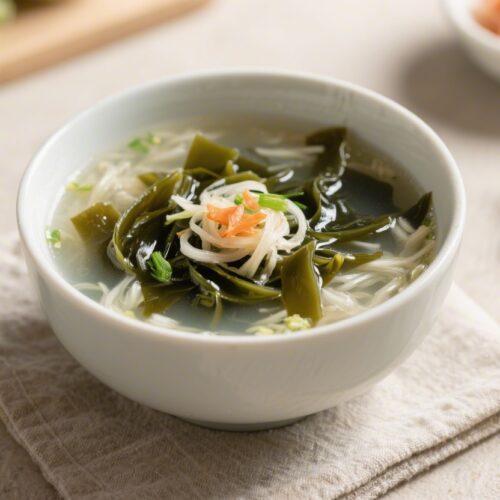
Easy Korean Miyeok Guk (Seaweed Soup) for Beginners – Comforting, Nutritious, and Simple
Ingredients
- Dried miyeok (wakame) seaweed: 1 ounce (about 30 g), dried; expands a lot
- Beef (optional): 4–6 ounces (115–170 g) thinly sliced brisket or stew beef, cut bite-size
- Sesame oil: 1 tablespoon
- Garlic: 3 cloves, minced
- Soy sauce: 1–1.5 tablespoons (Korean soup soy sauce if you have it; regular low-sodium soy sauce works)
- Salt: To taste
- Water or stock: 6 cups; use water, light beef stock, or anchovy-kelp broth
- Optional umami boosters: 1 teaspoon fish sauce, or 1 teaspoon doenjang (Korean soybean paste), or a small piece of kelp (dashima) removed before boiling
- Optional garnish: Sliced scallions, extra sesame oil, or roasted sesame seeds
Instructions
- Soak the seaweed: Place the dried miyeok in a large bowl and cover with plenty of cold water. Let it sit for 10–15 minutes until it’s soft and expanded. Drain, rinse, and roughly chop into bite-size pieces. You’ll have about 3–4 cups.
- Prep the beef (if using): Pat it dry and season lightly with a pinch of salt. This helps it brown and seasons the broth later.
- Heat the pot: In a medium pot, add the sesame oil over medium heat. Add the soaked seaweed and stir for 2–3 minutes. This step builds flavor and gives the soup its signature aroma.
- Add beef and garlic: Stir in the beef and garlic. Cook for 1–2 minutes until the beef loses most of its pink color. Don’t worry about fully cooking it yet.
- Season the base: Add 1 tablespoon soy sauce and stir to coat the seaweed and beef. If using doenjang, add it now and mash it into the mixture so it dissolves smoothly.
- Pour in liquid: Add 6 cups of water or stock. If you’re using a small piece of kelp, add it now and remove just as the soup reaches a gentle simmer.
- Simmer gently: Bring to a simmer, then lower the heat. Cook for 20–25 minutes. The seaweed should be tender, and the broth should taste savory and clean.
- Adjust seasoning: Taste and add more soy sauce or salt as needed. If you like a hint of depth, add a teaspoon of fish sauce. Finish with a drizzle of sesame oil if you prefer a richer aroma.
- Serve hot: Ladle into bowls and garnish with scallions or sesame seeds. Serve with steamed rice and a few banchan (side dishes) if you have them.
Printable Recipe Card
Want just the essential recipe details without scrolling through the article? Get our printable recipe card with just the ingredients and instructions.