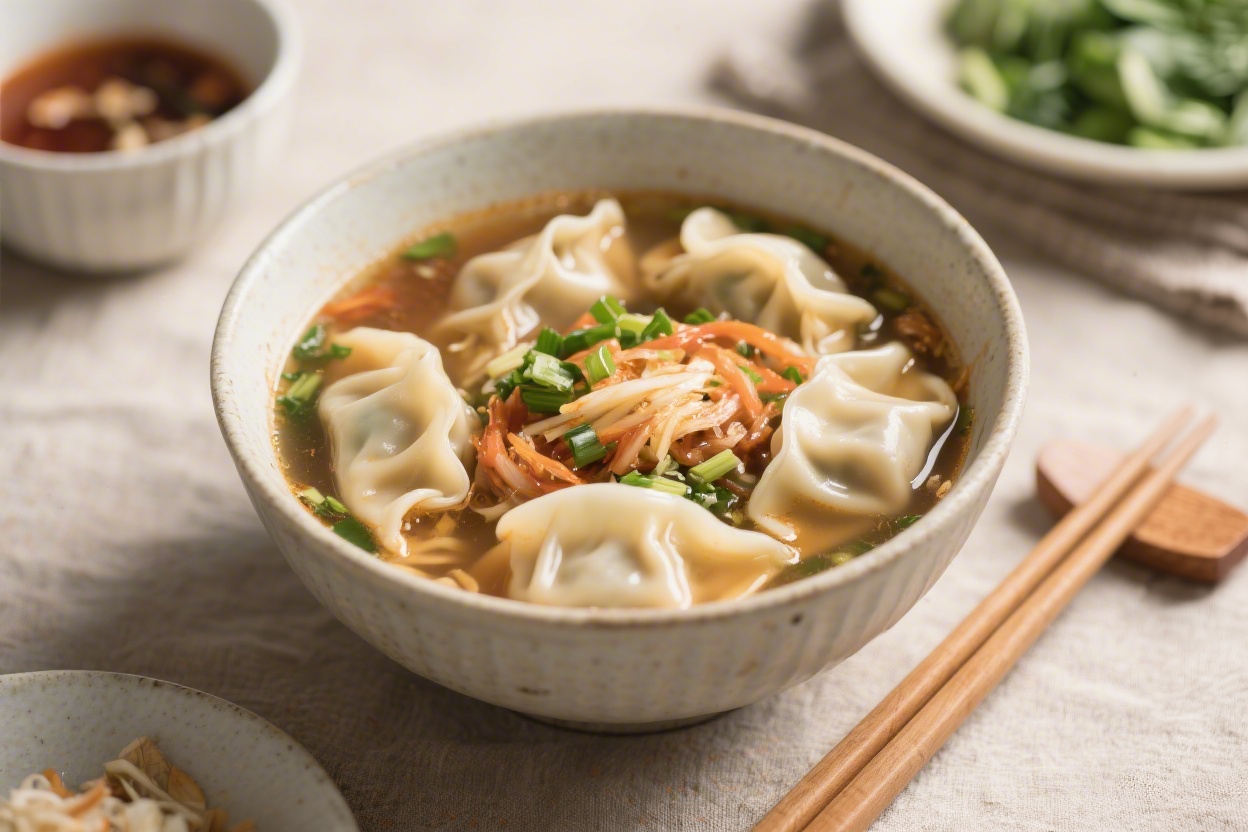
Easy Korean Mandu Guk Recipe for Cozy Meals
There are days when all you want is a warm, slurpable bowl that feels like a hug. Mandu guk—Korean dumpling soup—does exactly that without asking much of you. It’s a quick, one-pot meal with soft dumplings, tender egg ribbons, and a clean, savory broth.
You can use store-bought mandu to keep it easy or make your own if you’ve got them on hand. Either way, you’ll end up with a cozy, restorative soup you’ll want on repeat.
What Makes This Recipe So Good
- Fast but flavorful: Using frozen mandu and simple seasonings gives you deep, comforting flavor in under 30 minutes.
- One pot, minimal mess: Everything simmers in a single pot, so cleanup is easy.
- Flexible ingredients: Works with beef, chicken, or vegetable broth. Add rice cakes (tteok) if you like extra chew.
- Kid-friendly comfort: Mild broth, tender dumplings, and silky egg ribbons make it appealing to all ages.
- Weeknight-friendly: Pantry staples like soy sauce, garlic, and sesame oil bring it together fast.
Ingredients
- 8–12 frozen mandu (Korean dumplings; pork, beef, chicken, or vegetable)
- 6 cups broth (beef, chicken, or vegetable)
- 1–2 teaspoons soy sauce (to taste)
- 1 teaspoon fish sauce (optional, for depth)
- 2 cloves garlic, minced or grated
- 1 teaspoon toasted sesame oil
- 2 large eggs, lightly beaten
- 1 cup sliced Korean rice cakes (tteok) (optional)
- 2 green onions (scallions), thinly sliced
- Salt and black pepper, to taste
- Optional garnishes: roasted seaweed (gim) strips, a pinch of gochugaru (Korean red pepper flakes), extra sesame oil
Instructions
- Heat the broth: Add broth to a medium pot and bring to a gentle boil over medium-high heat.Stir in garlic, soy sauce, and fish sauce (if using).
- Add rice cakes (optional): If using tteok, add them now. Simmer 4–5 minutes until they start to soften and float.
- Add the mandu: Carefully slide in the frozen dumplings. Reduce to a steady simmer.Cook 6–8 minutes, or until the dumplings float and are cooked through. Stir gently to prevent sticking.
- Season the broth: Taste and adjust with a pinch of salt, more soy sauce, or a splash of water if it’s too salty. Add black pepper to taste.
- Create egg ribbons: Lower the heat to just below a simmer.With the soup swirling gently, drizzle in the beaten eggs in a thin stream while stirring slowly to create soft ribbons.
- Finish with aromatics: Turn off the heat. Stir in sesame oil and most of the green onions, reserving a few for garnish.
- Serve: Ladle into bowls. Top with remaining green onions, a few gim strips, and a pinch of gochugaru if you like a little heat.
Storage Instructions
- Fridge: Store leftovers in an airtight container for up to 3 days.The dumplings and rice cakes will soften, but the flavor stays great.
- Reheat: Warm gently on the stovetop over low heat. Add a splash of water or broth if it’s thickened. Avoid boiling hard to keep dumplings from bursting.
- Freezer: Freeze broth separately from uncooked dumplings for best texture.Cook from frozen when ready to eat.
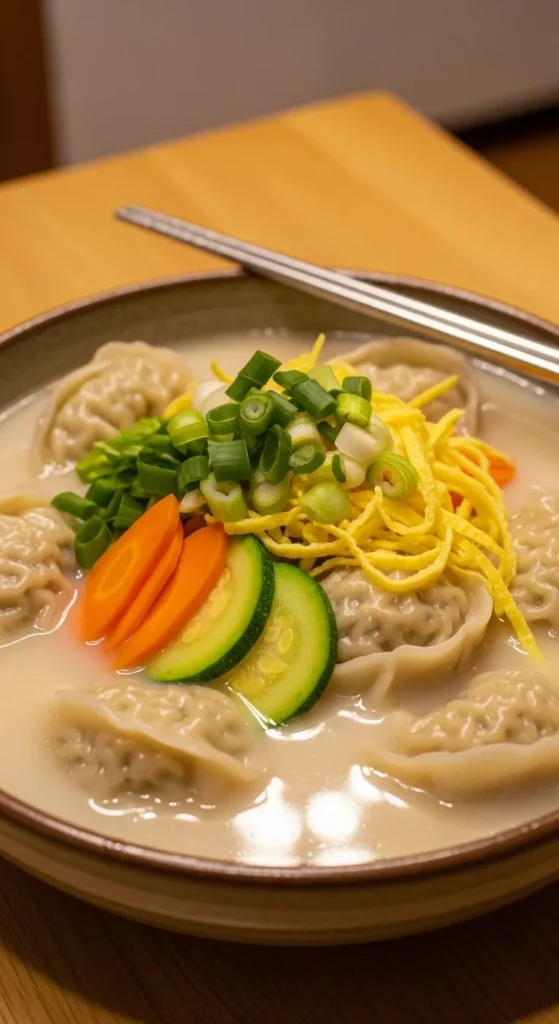
Why This is Good for You
- Protein and comfort in one bowl: Dumplings and eggs offer satisfying protein without feeling heavy.
- Hydrating and soothing: Warm, lightly seasoned broth can be easier to digest when you want something gentle.
- Balanced and flexible: Add spinach, mushrooms, or zucchini for extra fiber and vitamins without changing the core flavor.
- Customizable sodium: You control the salt with low-sodium broth and measured soy sauce.
What Not to Do
- Don’t boil aggressively after adding mandu: A rolling boil can split the dumplings and make the soup cloudy.
- Don’t over-season early: Broth reduces slightly as it simmers. Taste and adjust near the end.
- Don’t dump in eggs all at once: A slow drizzle creates soft ribbons; a quick pour makes clumps.
- Don’t skip aromatics: Sesame oil and green onions add signature aroma and finish the soup.
- Don’t crowd the pot: If making a big batch, cook in two rounds so dumplings don’t stick and break.
Recipe Variations
- Classic tteok-mandu guk: Add more rice cakes and a few drops of sesame oil for a New Year–style bowl that’s extra cozy.
- Spicy version: Stir in 1–2 teaspoons gochujang or a spoon of gochugaru in the broth. Balance with a pinch of sugar if needed.
- Mushroom umami: Use mushroom or vegetable broth and add sliced shiitake or enoki in step 2.
- Greens boost: Toss in a handful of baby spinach, bok choy, or napa cabbage in the last 2 minutes.
- Ginger-garlic lift: Add 1 teaspoon grated ginger with the garlic for a brighter, soothing broth.
- Sesame crunch: Finish with toasted sesame seeds and extra roasted seaweed for texture.
FAQ’s
Can I use Japanese gyoza or Chinese dumplings instead of mandu?
Yes.
The flavor and size may differ slightly, but any frozen dumpling works. Adjust cooking time based on package directions and aim for tender, floating dumplings.
What broth is best for mandu guk?
Beef broth is traditional and hearty, chicken is lighter and clean, and vegetable broth keeps it plant-friendly. Use what you have, then fine-tune with soy sauce and sesame oil.
Do I need to thaw the dumplings first?
No.
Add them straight from the freezer. Just give them a couple extra minutes if they’re large or very icy.
How do I keep the egg ribbons soft and silky?
Lower the heat so the soup is barely simmering. Drizzle eggs slowly in a thin stream while stirring gently in one direction.
What can I use instead of fish sauce?
Skip it and add a splash more soy sauce or a pinch of salt.
A few dried kelp pieces (kombu) simmered in the broth for 10 minutes can also add depth.
My soup tastes flat—how do I fix it?
Add a small splash of soy sauce, a pinch of salt, or a few drops of sesame oil. A grind of black pepper and fresh green onions can brighten it right away.
Can I make this gluten-free?
Yes. Use gluten-free soy sauce or tamari and confirm your dumplings and broth are gluten-free.
Many store-bought dumplings contain wheat, so check labels.
Can I make it vegetarian?
Absolutely. Use vegetable broth and vegetable dumplings. Skip fish sauce, and add mushrooms or kombu for extra umami.
Related Recipes
- Simple Korean Dak Gomtang (Chicken Soup) Recipe – Cozy, Clear, and Comforting
- Warm and Comforting Korean Gamjatang (Pork Bone Soup) Recipe – A Hearty, Homey Favorite
- Korean Soup Recipe – A Cozy, Flavor-Packed Classic
Wrapping Up
Mandu guk is the kind of soup that fits any night: simple, warming, and endlessly adaptable.
With a bag of frozen dumplings and a good broth, you can get a nourishing meal on the table fast. Keep the heat gentle, season to taste, and finish with sesame oil and green onions. Add spice or extra veggies if you want, or keep it classic and clean.
Either way, you’ll have a cozy bowl that feels like home.
Easy Korean Mandu Guk (Dumpling Soup) for Cozy Meals - Simple, Comforting, and Satisfying
Ingredients
- 8–12 frozen mandu (Korean dumplings; pork, beef, chicken, or vegetable)
- 6 cups broth (beef, chicken, or vegetable)
- 1–2 teaspoons soy sauce (to taste)
- 1 teaspoon fish sauce (optional, for depth)
- 2 cloves garlic, minced or grated
- 1 teaspoon toasted sesame oil
- 2 large eggs, lightly beaten
- 1 cup sliced Korean rice cakes (tteok) (optional)
- 2 green onions (scallions), thinly sliced
- Salt and black pepper, to taste
- Optional garnishes: roasted seaweed (gim) strips, a pinch of gochugaru (Korean red pepper flakes), extra sesame oil
Instructions
- Heat the broth: Add broth to a medium pot and bring to a gentle boil over medium-high heat. Stir in garlic, soy sauce, and fish sauce (if using).
- Add rice cakes (optional): If using tteok, add them now. Simmer 4–5 minutes until they start to soften and float.
- Add the mandu: Carefully slide in the frozen dumplings. Reduce to a steady simmer. Cook 6–8 minutes, or until the dumplings float and are cooked through. Stir gently to prevent sticking.
- Season the broth: Taste and adjust with a pinch of salt, more soy sauce, or a splash of water if it’s too salty. Add black pepper to taste.
- Create egg ribbons: Lower the heat to just below a simmer. With the soup swirling gently, drizzle in the beaten eggs in a thin stream while stirring slowly to create soft ribbons.
- Finish with aromatics: Turn off the heat. Stir in sesame oil and most of the green onions, reserving a few for garnish.
- Serve: Ladle into bowls. Top with remaining green onions, a few gim strips, and a pinch of gochugaru if you like a little heat.
Printable Recipe Card
Want just the essential recipe details without scrolling through the article? Get our printable recipe card with just the ingredients and instructions.