Easy Kimchi Jjigae Recipe (Spicy Korean Kimchi Soup)
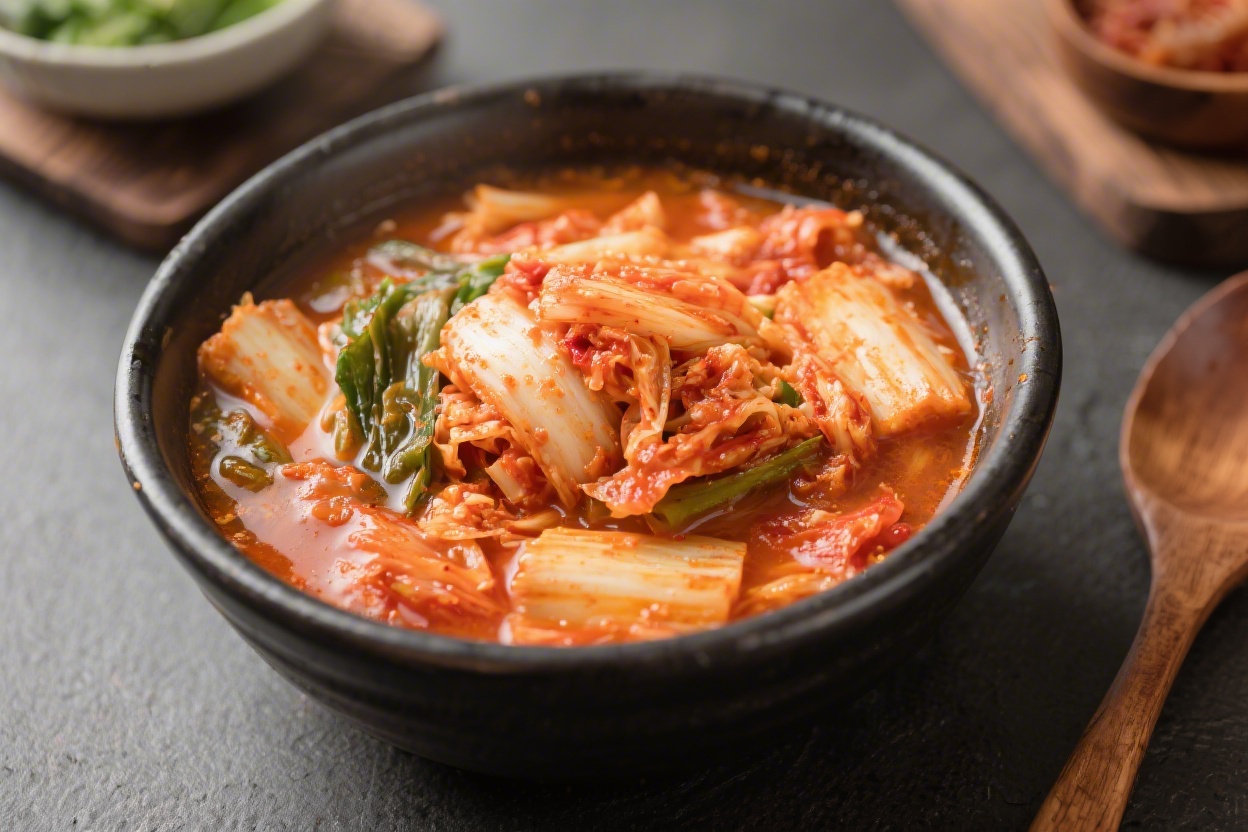
Kimchi jjigae is one of those dishes that warms you from the inside out. It’s bold, spicy, and deeply savory, with a tang that only good, well-fermented kimchi can bring. If you’re craving something cozy but quick, this stew delivers big flavor with simple steps.
You don’t need special skills—just a pot, a handful of pantry staples, and about 30 minutes. This version keeps it easy while staying true to the classic taste.
What Makes This Special
This recipe leans on everyday ingredients but still captures the soul of Korean home cooking. The key is well-fermented kimchi, which adds depth and a gentle sourness that balances the heat.
A touch of gochujang (Korean chili paste) makes the broth silky and rich, while gochugaru (Korean chili flakes) brings clean heat without bitterness. Traditional add-ins like tofu and pork belly make it hearty, but the recipe is flexible enough for vegetarian or pescatarian swaps. It’s weeknight-friendly, but tastes like it simmered all afternoon.
Shopping List
- 2 cups well-fermented napa cabbage kimchi, plus 2 tablespoons kimchi juice
- 6–8 ounces pork belly or shoulder, thinly sliced (optional; sub mushrooms for vegetarian)
- 1 small onion, thinly sliced
- 2 green onions, chopped (white and green parts separated)
- 1 block soft or medium tofu (about 12–14 ounces), cut into 1-inch cubes
- 1 tablespoon neutral oil (e.g., canola, avocado, or grapeseed)
- 1 tablespoon gochugaru (Korean red pepper flakes), adjust to taste
- 1 tablespoon gochujang (Korean red pepper paste)
- 1 tablespoon soy sauce
- 1 teaspoon sugar (optional, to balance acidity)
- 2 cloves garlic, minced
- 1 teaspoon sesame oil
- 3–3½ cups broth (anchovy-dashima stock is classic; chicken or vegetable broth also work)
- Optional add-ins: sliced mushrooms (shiitake or oyster), zucchini, sliced jalapeño or Korean cheongyang pepper
- Optional garnish: toasted sesame seeds, extra green onions
Step-by-Step Instructions
- Prep the aromatics and protein. Slice the onion and green onions.Cut the tofu into cubes. If using pork belly, slice it thin so it renders and browns quickly. Have the kimchi roughly chopped into bite-size pieces.
- Heat the pot. Set a medium pot over medium heat and add the neutral oil.When it shimmers, add the pork belly (if using) and cook 3–4 minutes until lightly browned and some fat has rendered. If skipping meat, warm the oil and go straight to the next step.
- Sauté the kimchi and onions. Add the onion, chopped kimchi, and the white parts of the green onions. Cook 4–5 minutes, stirring, until the kimchi softens and turns glossy.This step builds flavor, so don’t rush it.
- Bloom the seasonings. Stir in the garlic, gochujang, and gochugaru. Cook 30–45 seconds until fragrant. This helps the chili and paste release color and depth.
- Deglaze and add broth. Pour in the kimchi juice, soy sauce, sugar (if using), and 3 cups of broth.Scrape up any browned bits from the bottom. Bring to a gentle boil.
- Simmer. Reduce to a steady simmer and cook 10–12 minutes. The flavors will meld, and the broth will deepen in color.If it gets too thick, add the remaining ½ cup broth.
- Add tofu and finish. Gently slide in the tofu cubes and simmer 3–5 minutes more to warm through. Drizzle in the sesame oil. Taste and adjust: add more soy for salt, a pinch more sugar for balance, or extra gochugaru for heat.
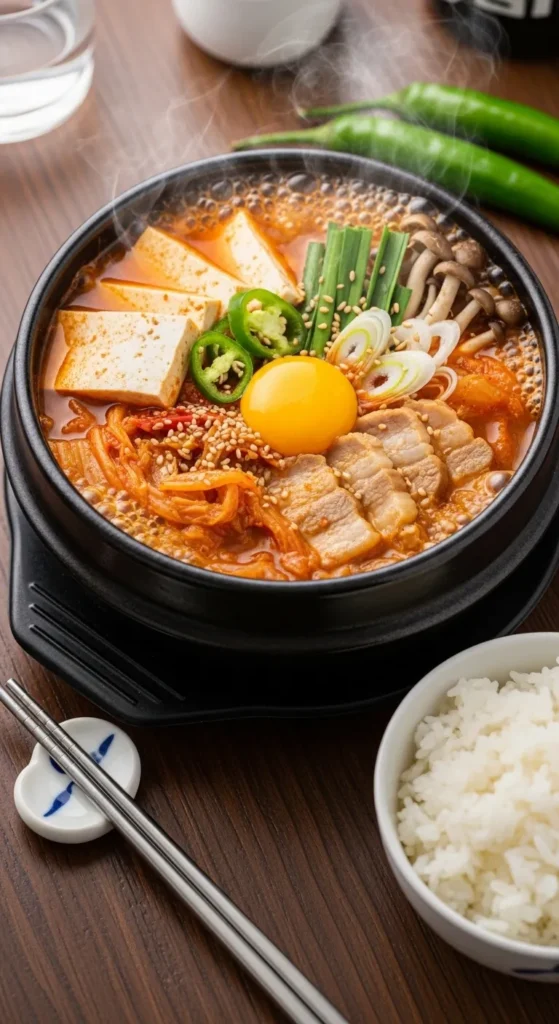
- Garnish and serve. Turn off the heat and top with the green parts of the green onions.Serve bubbling hot with steamed rice and, if you like, a fried egg on the side.
How to Store
- Refrigerator: Cool completely, then store in an airtight container for up to 3–4 days. The flavor often deepens by day two.
- Freezer: Freeze up to 2 months. Use freezer-safe containers, leaving some headspace.Thaw overnight in the fridge before reheating.
- Reheating: Warm gently on the stove over medium heat. If the broth reduced, add a splash of water or broth to loosen. Avoid vigorous boiling once tofu is added to keep it intact.
Health Benefits
- Probiotics from kimchi: Fermented kimchi can support gut health.Heating reduces live cultures, but many people still find it easier to digest and full of nutrients.
- Protein options: Pork adds satisfying protein and iron. For a lighter take, tofu delivers plant-based protein with minimal saturated fat.
- Vitamins and minerals: Kimchi brings vitamins A and C, plus fiber. Add mushrooms and zucchini for extra antioxidants and texture.
- Broth-based and filling: Compared to creamier soups, this stew is hearty yet relatively light, especially if you use lean protein or go vegetarian.
What Not to Do
- Don’t use fresh, unfermented kimchi. Young kimchi tastes flat here.You want tangy, aged kimchi for that signature depth.
- Don’t skip sautéing the kimchi. Raw kimchi straight into broth won’t deliver the same rich flavor. The quick sauté is crucial.
- Don’t overpower it with salt early on. The broth, soy sauce, and kimchi are salty. Season at the end to avoid oversalting.
- Don’t boil tofu too hard. A rolling boil can break it apart.Simmer gently after adding tofu.
- Don’t mix up your chili ingredients. Gochugaru and gochujang are not the same. Using only one changes the balance of heat and body.
Variations You Can Try
- Tuna Kimchi Jjigae: Add 1 can of oil-packed tuna (drained) during the last 5 minutes of simmering. It’s classic, affordable, and super savory.
- Mushroom and Tofu: Skip meat and load up on shiitake, oyster, or enoki mushrooms for a deep umami bite.
- Seafood Twist: Add shrimp or clams in the last few minutes of cooking.Simmer just until the shrimp turn pink and clams open.
- Extra Veg: Thinly slice zucchini or add napa cabbage stems for more crunch. Stir in a handful of spinach right at the end.
- Rice Cake Add-In: Toss in sliced tteok (Korean rice cakes) for a chewier, more filling stew.
- Spice Control: Reduce gochugaru for mild heat or add a fresh hot pepper for a punchier finish.
FAQ’s
What if my kimchi isn’t very sour yet?
Let it ferment longer in the fridge, or add a splash of rice vinegar to the pot for a gentle tang. A teaspoon of fish sauce can also deepen the flavor without making it fishy.
Can I make this without gochujang?
Yes, but the stew will be less rounded and slightly thinner.
Add a bit more gochugaru and an extra teaspoon of soy sauce and sugar to balance the flavor.
Is there a gluten-free option?
Use a gluten-free soy sauce or tamari, and check that your gochujang and gochugaru are labeled gluten-free. Many brands are fine, but always read the label.
Can I use chicken instead of pork?
Absolutely. Thinly sliced chicken thighs work best because they stay juicy.
Sauté them just like pork, then proceed with the recipe.
How spicy is this recipe?
It’s medium-spicy for most people. For milder heat, halve the gochugaru and skip any fresh chilies. For extra heat, add more gochugaru or a sliced hot pepper near the end.
What should I serve with kimchi jjigae?
Steamed short-grain rice is the classic pairing.
You can also add simple sides like roasted seaweed, a fried egg, or a crisp cucumber salad to cool things down.
Can I make it in advance?
Yes. The flavors often improve the next day. Reheat gently and add a splash of broth if it has thickened in the fridge.
Why add sugar?
A small amount of sugar helps balance the acidity and heat, especially if your kimchi is very sour.
It shouldn’t taste sweet—just rounded.
Do I need anchovy stock?
No. It’s traditional and adds great umami, but chicken or vegetable broth works. If you skip anchovy stock, a teaspoon of fish sauce can help mimic some of that depth.
Can I freeze it with tofu in it?
You can, but the tofu’s texture may become slightly spongy after thawing.
If that bothers you, freeze the stew without tofu and add fresh tofu when reheating.
Related Recipes
- Comforting Korean Doenjang Jjigae (Soybean Paste Soup) Recipe – Simple, Savory, and Satisfying
- Quick Sundubu Jjigae (Soft Tofu Soup) for Busy Nights – Fast, Cozy, and Flavor-Packed
- Hearty Korean Galbitang (Beef Short Rib Soup) Made Simple – Comforting, Clean, and Satisfying
Final Thoughts
This easy kimchi jjigae hits that perfect balance of spicy, tangy, and comforting. With simple steps and flexible ingredients, it’s the kind of recipe you’ll return to on busy nights and lazy weekends alike. Make it your own—swap the protein, adjust the heat, and add the veggies you love.
Keep a jar of good kimchi in the fridge, and you’re always 30 minutes away from a deeply satisfying meal.
Easy Kimchi Jjigae Recipe (Spicy Korean Kimchi Soup) - Comforting, Flavorful, and Fast
Ingredients
- 2 cups well-fermented napa cabbage kimchi, plus 2 tablespoons kimchi juice
- 6–8 ounces pork belly or shoulder, thinly sliced (optional; sub mushrooms for vegetarian)
- 1 small onion, thinly sliced
- 2 green onions, chopped (white and green parts separated)
- 1 block soft or medium tofu (about 12–14 ounces), cut into 1-inch cubes
- 1 tablespoon neutral oil (e.g., canola, avocado, or grapeseed)
- 1 tablespoon gochugaru (Korean red pepper flakes), adjust to taste
- 1 tablespoon gochujang (Korean red pepper paste)
- 1 tablespoon soy sauce
- 1 teaspoon sugar (optional, to balance acidity)
- 2 cloves garlic, minced
- 1 teaspoon sesame oil
- 3–3½ cups broth (anchovy-dashima stock is classic; chicken or vegetable broth also work)
- Optional add-ins: sliced mushrooms (shiitake or oyster), zucchini, sliced jalapeño or Korean cheongyang pepper
- Optional garnish: toasted sesame seeds, extra green onions
Instructions
- Prep the aromatics and protein. Slice the onion and green onions. Cut the tofu into cubes. If using pork belly, slice it thin so it renders and browns quickly. Have the kimchi roughly chopped into bite-size pieces.
- Heat the pot. Set a medium pot over medium heat and add the neutral oil. When it shimmers, add the pork belly (if using) and cook 3–4 minutes until lightly browned and some fat has rendered. If skipping meat, warm the oil and go straight to the next step.
- Sauté the kimchi and onions. Add the onion, chopped kimchi, and the white parts of the green onions. Cook 4–5 minutes, stirring, until the kimchi softens and turns glossy. This step builds flavor, so don’t rush it.
- Bloom the seasonings. Stir in the garlic, gochujang, and gochugaru. Cook 30–45 seconds until fragrant. This helps the chili and paste release color and depth.
- Deglaze and add broth. Pour in the kimchi juice, soy sauce, sugar (if using), and 3 cups of broth. Scrape up any browned bits from the bottom. Bring to a gentle boil.
- Simmer. Reduce to a steady simmer and cook 10–12 minutes. The flavors will meld, and the broth will deepen in color. If it gets too thick, add the remaining ½ cup broth.
- Add tofu and finish. Gently slide in the tofu cubes and simmer 3–5 minutes more to warm through. Drizzle in the sesame oil. Taste and adjust: add more soy for salt, a pinch more sugar for balance, or extra gochugaru for heat.
- Garnish and serve. Turn off the heat and top with the green parts of the green onions. Serve bubbling hot with steamed rice and, if you like, a fried egg on the side.
Printable Recipe Card
Want just the essential recipe details without scrolling through the article? Get our printable recipe card with just the ingredients and instructions.