Comforting Korean Doenjang Jjigae Recipe
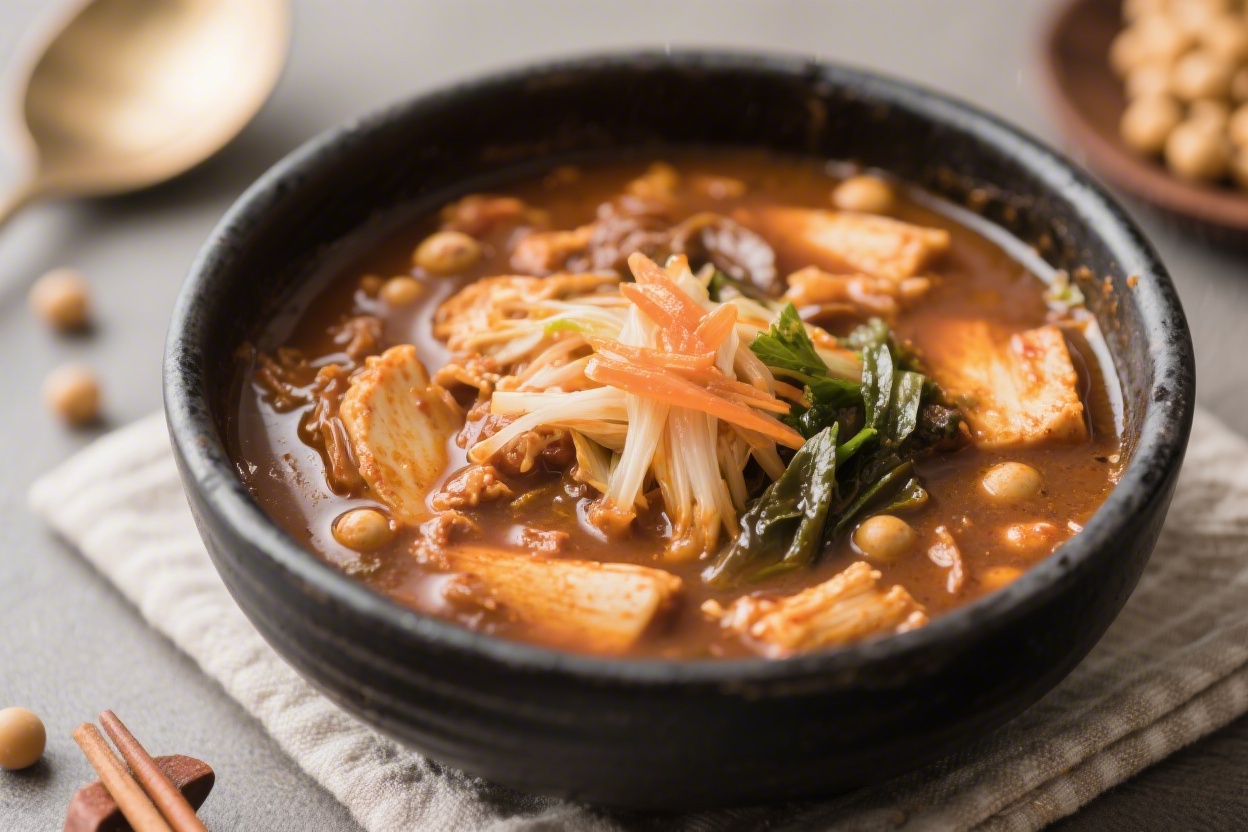
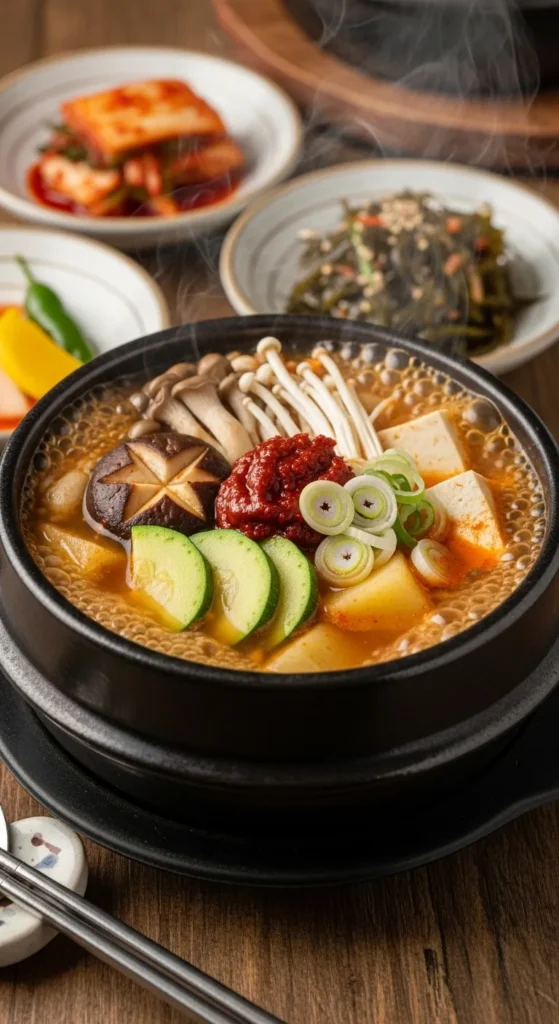
Doenjang jjigae is the kind of soup that warms you from the inside out. It’s humble, deeply savory, and packed with vegetables and tofu in a rich, earthy broth made from fermented soybean paste. If you love miso soup, think of this as its heartier, bolder cousin.
It’s quick enough for a weeknight but tastes like it simmered all day. Once you learn the basics, you can adjust it to your taste and what you have in the fridge.
What Makes This Recipe So Good
- Deep, comforting flavor: Doenjang brings umami and a gentle funk that feels both rustic and refined.
- Flexible and forgiving: Swap veggies, change the protein, and make it as light or hearty as you want.
- Quick to make: From prep to bowl in about 30 minutes, especially if you have prepped stock.
- Nutritious and satisfying: Protein from tofu, fiber from veggies, and a broth that doesn’t feel heavy.
- Authentic but accessible: A few pantry ingredients unlock classic Korean flavor at home.
Shopping List
- Doenjang (Korean soybean paste): 2 to 3 tablespoons, to taste
- Gochugaru (Korean red pepper flakes): 1 to 2 teaspoons (optional for heat)
- Anchovy-kelp stock (or water/low-sodium vegetable broth): 4 cups
- Firm or medium-firm tofu: 7 to 10 ounces, cut into cubes
- Potato: 1 small, peeled and diced (Yukon Gold or russet)
- Zucchini: 1 small, sliced into half-moons
- Onion: 1/2 medium, thinly sliced
- Garlic: 3 to 4 cloves, minced
- Green chili or jalapeño: 1, thinly sliced (optional)
- Scallions: 2, chopped
- Enoki or shiitake mushrooms: 1 cup, trimmed and separated
- Korean radish (mu) or daikon: 1 cup, thinly sliced (optional but great)
- Sesame oil: 1 teaspoon (optional for finishing)
- Soy sauce or soup soy sauce (guk-ganjang): 1 to 2 teaspoons, as needed for seasoning
Step-by-Step Instructions
- Make the stock (if not using prepared): In a pot, add 4 cups water, 6 to 8 dried anchovies (heads and guts removed), and a 4-inch piece of dried kelp (kombu/dashima). Bring to a gentle simmer for 10 minutes, remove kelp at the 10-minute mark, and simmer anchovies 5 more minutes.Strain. If you’re short on time, use low-sodium vegetable broth or water.
- Prep the vegetables and tofu: Dice the potato, slice the zucchini and onion, mince the garlic, chop the scallions, and cube the tofu. Keep the mushrooms bite-size.Thinly slice the green chili if using.
- Bloom the doenjang: In a small bowl, whisk 2 tablespoons doenjang with a ladle of warm stock until smooth. This helps it dissolve evenly in the soup and prevents clumps.
- Start the base: Bring the stock to a simmer over medium heat. Add onion, garlic, potato, and radish (if using).Simmer for 6 to 8 minutes, until the potato is just starting to turn tender.
- Add the doenjang and heat: Stir in the dissolved doenjang. Taste the broth. If you want it spicier, add 1 to 2 teaspoons gochugaru now.Let it simmer 3 to 4 minutes to meld.
- Add remaining vegetables and tofu: Add zucchini and mushrooms, then gently slide in the tofu. Simmer another 5 to 7 minutes, until the zucchini is tender but not mushy.
- Finish and season: Add sliced green chili and scallions. Taste.Adjust saltiness with a splash of soy sauce or a pinch more doenjang. If you like a nutty note, finish with 1 teaspoon sesame oil.
- Serve hot: Ladle into bowls and serve with steamed rice and optional kimchi on the side. The broth should be rich, savory, and slightly thick from the paste.
How to Store
- Refrigerator: Cool completely, then store in an airtight container for up to 3 days.The flavors deepen by day two.
- Freezer: Freeze for up to 2 months. Tofu texture softens a bit after thawing, but the soup is still delicious. For best texture, freeze without tofu and add fresh when reheating.
- Reheating: Warm over medium heat until steaming.Add a splash of water or stock if it thickened in the fridge. Taste and re-season with a small pinch of doenjang or soy sauce if needed.
Benefits of This Recipe
- High in umami, low on fuss: Doenjang brings deep flavor without long cooking times or long ingredient lists.
- Protein and fiber rich: Tofu and vegetables make it filling without feeling heavy.
- Customizable nutrition: Add more mushrooms for antioxidants, radish for digestion support, or greens for extra vitamins.
- Great for meal prep: Keeps well and tastes even better the next day.
- Budget-friendly: Simple ingredients stretch into multiple servings.
Common Mistakes to Avoid
- Boiling the doenjang too hard: A rolling boil can mute delicate flavors. Keep it at a steady simmer after adding the paste.
- Skipping the dissolve step: Stirring doenjang directly into the pot can leave clumps.Always thin it with a little warm stock first.
- Overcooking the vegetables: Zucchini and mushrooms turn mushy fast. Add them toward the end and keep them tender.
- Over-salting early: Doenjang is salty. Taste after the paste dissolves before adding soy sauce.
- Using too much heat: Gochugaru is optional.Start with less; you can always add more at the table.
Variations You Can Try
- Seafood: Add a handful of clams or shrimp during the last 5 minutes for a briny, sweet layer.
- Beef or pork: Sauté thinly sliced beef brisket or pork belly in the pot first, then build the soup on top for a richer broth.
- Vegetarian: Use vegetable stock, add extra mushrooms, and toss in spinach or baby bok choy at the end.
- Spicy version: Stir in a spoonful of gochujang along with the doenjang for sweet heat and extra body.
- Earthy and nutty: Add a few slices of Korean perilla leaves or a sprinkle of roasted sesame seeds before serving.
- No-potato version: Use more tofu and zucchini if you prefer a lighter, quicker-cooking bowl.
FAQ’s
What is the difference between doenjang and miso?
Doenjang is a traditional Korean fermented soybean paste that’s chunkier, earthier, and often stronger in flavor than Japanese miso. It usually contains only soybeans and salt without added grains, which gives it a bolder, more rustic taste. Miso can work in a pinch, but the soup won’t taste quite the same.
Can I make this without anchovy stock?
Yes.
Use low-sodium vegetable broth or water. If you skip anchovy stock, consider adding a dried shiitake or a small piece of kombu during simmering for extra umami, then remove before serving.
How spicy is this soup?
Classic doenjang jjigae isn’t necessarily spicy. The heat depends on whether you add gochugaru or green chili.
Keep it mild for a family-friendly bowl, or add spice at the table.
What kind of tofu works best?
Firm or medium-firm tofu holds up well in the simmering broth without breaking apart. Silken tofu is delicate and can be used for a softer texture, but add it very gently at the end.
How do I know I’ve added enough doenjang?
Taste the broth after it simmers with the paste for a few minutes. You’re aiming for a savory, rounded flavor with a pleasant salinity.
Start with 2 tablespoons, then add up to 1 more if the broth tastes flat.
Can I add kimchi to this soup?
You can, but that becomes closer to kimchi jjigae, which has a tangier, spicier profile. If you want a hybrid, add a small handful of well-fermented kimchi along with the onion and potato for a subtle kick.
What should I serve with doenjang jjigae?
Steamed short-grain rice is classic. Add a couple of simple banchan like kimchi, seasoned spinach, or pickled radish for a balanced meal.
Is doenjang gluten-free?
Many brands are naturally gluten-free, but always check the label.
If you’re sensitive to gluten, verify both the doenjang and soy sauce (or use tamari) are gluten-free.
Related Recipes
- Quick Sundubu Jjigae (Soft Tofu Soup) for Busy Nights – Fast, Cozy, and Flavor-Packed
- Easy Kimchi Jjigae Recipe (Spicy Korean Kimchi Soup) – Comforting, Flavorful, and Fast
- Hearty Korean Galbitang (Beef Short Rib Soup) Made Simple – Comforting, Clean, and Satisfying
Wrapping Up
Doenjang jjigae is simple comfort with big character. With a jar of soybean paste and a few fresh vegetables, you can make a steaming bowl that tastes like home cooking, even on a busy night. Keep the method the same, swap in what you have, and season to your taste.
This is the kind of recipe that becomes second nature—and one you’ll crave again and again.
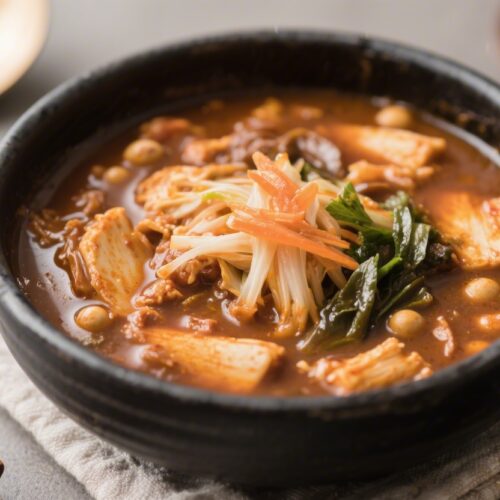
Comforting Korean Doenjang Jjigae (Soybean Paste Soup) Recipe - Simple, Savory, and Satisfying
Ingredients
- Doenjang (Korean soybean paste): 2 to 3 tablespoons, to taste
- Gochugaru (Korean red pepper flakes): 1 to 2 teaspoons (optional for heat)
- Anchovy-kelp stock (or water/low-sodium vegetable broth): 4 cups
- Firm or medium-firm tofu: 7 to 10 ounces, cut into cubes
- Potato: 1 small, peeled and diced (Yukon Gold or russet)
- Zucchini: 1 small, sliced into half-moons
- Onion: 1/2 medium, thinly sliced
- Garlic: 3 to 4 cloves, minced
- Green chili or jalapeño: 1, thinly sliced (optional)
- Scallions: 2, chopped
- Enoki or shiitake mushrooms: 1 cup, trimmed and separated
- Korean radish (mu) or daikon: 1 cup, thinly sliced (optional but great)
- Sesame oil: 1 teaspoon (optional for finishing)
- Soy sauce or soup soy sauce (guk-ganjang): 1 to 2 teaspoons, as needed for seasoning
Instructions
- Make the stock (if not using prepared): In a pot, add 4 cups water, 6 to 8 dried anchovies (heads and guts removed), and a 4-inch piece of dried kelp (kombu/dashima). Bring to a gentle simmer for 10 minutes, remove kelp at the 10-minute mark, and simmer anchovies 5 more minutes. Strain. If you’re short on time, use low-sodium vegetable broth or water.
- Prep the vegetables and tofu: Dice the potato, slice the zucchini and onion, mince the garlic, chop the scallions, and cube the tofu. Keep the mushrooms bite-size. Thinly slice the green chili if using.
- Bloom the doenjang: In a small bowl, whisk 2 tablespoons doenjang with a ladle of warm stock until smooth. This helps it dissolve evenly in the soup and prevents clumps.
- Start the base: Bring the stock to a simmer over medium heat. Add onion, garlic, potato, and radish (if using). Simmer for 6 to 8 minutes, until the potato is just starting to turn tender.
- Add the doenjang and heat: Stir in the dissolved doenjang. Taste the broth. If you want it spicier, add 1 to 2 teaspoons gochugaru now. Let it simmer 3 to 4 minutes to meld.
- Add remaining vegetables and tofu: Add zucchini and mushrooms, then gently slide in the tofu. Simmer another 5 to 7 minutes, until the zucchini is tender but not mushy.
- Finish and season: Add sliced green chili and scallions. Taste. Adjust saltiness with a splash of soy sauce or a pinch more doenjang. If you like a nutty note, finish with 1 teaspoon sesame oil.
- Serve hot: Ladle into bowls and serve with steamed rice and optional kimchi on the side. The broth should be rich, savory, and slightly thick from the paste.
Printable Recipe Card
Want just the essential recipe details without scrolling through the article? Get our printable recipe card with just the ingredients and instructions.