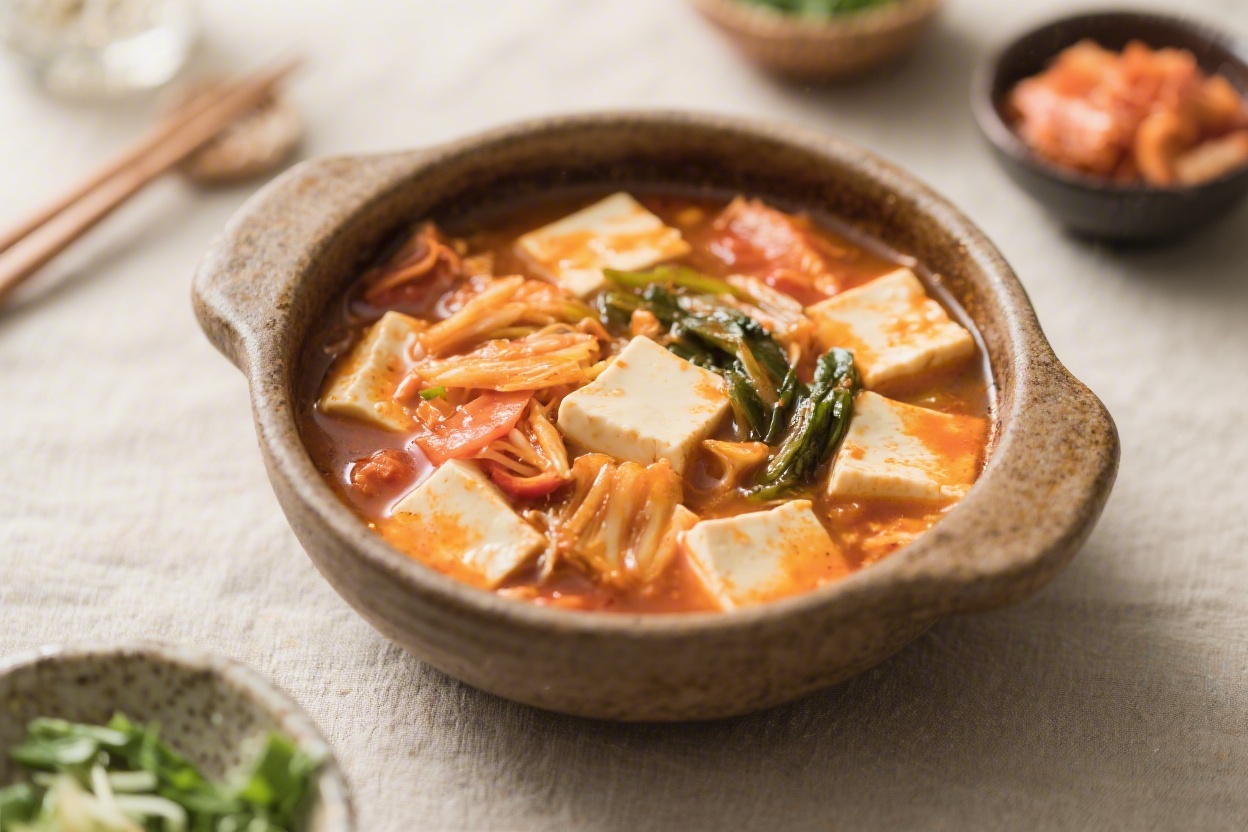
Quick Sundubu Jjigae Recipe for Busy Nights
Sundubu jjigae is the kind of meal you make when you want something hot, comforting, and fast. This soft tofu soup comes together in one pot, delivers big flavor, and doesn’t require fancy skills. You get a rich, savory broth, silky tofu, and your choice of add-ins—all in under 25 minutes.
It’s great on its own or with a bowl of rice, and you can adjust the heat to suit anyone at the table. If you’re short on time but craving something truly satisfying, this is the recipe to keep in your back pocket.
What Makes This Special
Classic sundubu jjigae is beloved for its deep, spicy broth and custardy tofu. This version keeps the soul of the dish but speeds things up for weeknights.
You’ll use pantry-friendly shortcuts without losing that signature depth. It’s flexible, too—add mushrooms, shrimp, or leftover veggies and make it your own. Best of all, it’s a one-pot wonder with minimal cleanup.
Ingredients
- 1 tablespoon neutral oil (canola, avocado, or grapeseed)
- 2 teaspoons sesame oil
- 2 cloves garlic, minced
- 1 teaspoon grated ginger (optional but nice)
- 2 tablespoons gochugaru (Korean red pepper flakes; adjust for heat)
- 1 tablespoon gochujang (Korean chili paste) or an extra 1 tablespoon gochugaru
- 1 to 1 1/2 tablespoons soy sauce, to taste
- 2 cups low-sodium chicken or vegetable broth (or anchovy/kelp broth if you have it)
- 1/2 cup thinly sliced onion
- 1/2 cup sliced mushrooms (shiitake, cremini, or enoki)
- 4 to 6 ounces thinly sliced pork belly, beef, or shrimp (optional; pick one)
- 1 tube extra-soft tofu (sundubu), or 14 ounces silken/soft tofu
- 1 egg (optional, for finishing)
- 1 to 2 scallions, thinly sliced
- Salt and pepper, to taste
- Kimchi (optional, chopped, about 1/2 cup, for extra punch)
Step-by-Step Instructions
- Heat the pot. Set a medium saucepan or small pot over medium heat.Add the neutral oil and sesame oil. When the oil shimmers, you’re ready.
- Bloom the aromatics. Add garlic and ginger. Stir for 20–30 seconds until fragrant.Don’t let it burn.
- Build the base. Add gochugaru and gochujang. Stir for 15–20 seconds to bloom the spices. The mixture will look like a red paste and smell toasty.
- Deglaze and simmer. Pour in the broth and soy sauce, scraping the bottom to dissolve any browned bits.Add the onion and mushrooms. If using kimchi, stir it in now.
- Add protein (optional). If you’re using pork, beef, or shrimp, add it and simmer for 3–4 minutes until just cooked. Skim any foam if you like a cleaner broth.
- Add the tofu. Gently spoon in the soft tofu, breaking it into big chunks with your spoon.Keep the pieces large so they stay silky. Simmer for 4–5 minutes to heat through.
- Taste and adjust. Add a pinch of salt if needed, or more soy sauce for depth. If you want extra heat, sprinkle in more gochugaru.
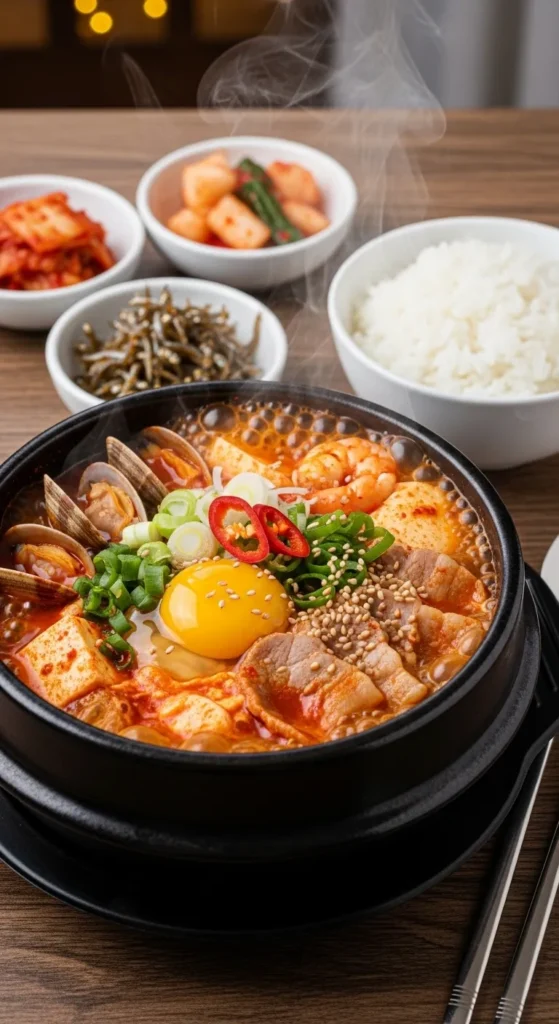
- Finish with the egg. Crack an egg straight into the bubbling soup.Let it poach for 1–2 minutes for a runny yolk, or longer for a firmer set. Top with scallions and a few grinds of pepper.
- Serve hot. Ladle into bowls. Serve with steamed rice and, if you like, a drizzle of sesame oil or a side of kimchi.
Keeping It Fresh
- Make-ahead base: Mix the garlic, ginger, gochugaru, and gochujang with sesame oil in a small jar. Refrigerate up to 5 days.When ready, just sauté the paste and add broth.
- Storage: Store leftovers in an airtight container for up to 3 days. The tofu will break down a bit but stays tasty.
- Reheating: Warm gently on the stove over medium-low heat. Add a splash of water or broth if it thickens.Crack in a fresh egg after reheating for that just-made feel.
- Freezing: Not ideal. Soft tofu changes texture when frozen. If you must, freeze only the broth base without tofu and add fresh tofu when reheating.
Health Benefits
- Protein and minerals: Soft tofu provides plant-based protein, plus calcium and iron (especially if calcium-set).Add shrimp or lean beef for an extra boost.
- Anti-inflammatory spices: Gochugaru and garlic bring antioxidants and may support heart health.
- Lower in saturated fat: When made with vegetable broth and no fatty meats, this soup is light yet filling.
- Hydration and electrolytes: Brothy soups help with hydration; kimchi adds gut-friendly probiotics if not boiled for too long.
What Not to Do
- Don’t overcook the tofu. Boiling it hard will break it into mush. Gentle simmer is key.
- Don’t skip blooming the chili. Heating gochugaru and gochujang in oil unlocks deeper flavor. Raw chili tastes flat.
- Don’t overload the pot. Too many mix-ins can dilute the broth and muddy the flavors.Keep it focused.
- Don’t add the egg too early. Wait until the soup is hot and ready to serve; otherwise it will overcook and turn rubbery.
- Don’t rely only on salt. Use soy sauce to add umami and balance, then fine-tune with a pinch of salt at the end.
Variations You Can Try
- Seafood Lover’s: Use a mix of shrimp, clams, and squid. Swap in anchovy-kelp broth for briny depth.
- Mushroom Medley:</-strong> Go meatless with shiitake, enoki, and oyster mushrooms. Add a dash of vegetarian “fish” sauce or a splash of kombu dashi.
- Kimchi Sundubu: Stir in 3/4 cup well-fermented kimchi and a spoonful of kimchi juice.It adds tang and complexity.
- Extra-Hearty:</-strong> Add thinly sliced pork belly and a handful of baby spinach at the end for color and nutrients.
- Mild and Cozy: Reduce gochugaru to 1 teaspoon and skip gochujang. Add a drizzle of sesame oil and a pinch of sugar to round it out.
- Gluten-Free: Use gluten-free soy sauce or tamari and ensure your gochujang is certified gluten-free.
FAQ’s
Can I use firm tofu instead of soft tofu?
Yes, but the texture will be less silky. If firm is all you have, cut it into small cubes and simmer gently so it absorbs flavor without crumbling.
What if I don’t have gochujang?
Use more gochugaru and add a small pinch of sugar or honey to mimic the slight sweetness of gochujang.
It won’t be identical, but it’ll still be delicious.
Is this soup very spicy?
It’s as spicy as you make it. Start with less gochugaru, then taste and add more. You can also serve it with extra chili flakes on the side.
Which broth works best?
Anchovy-kelp broth is traditional and adds rich umami.
Chicken or vegetable broth is perfectly fine for weeknights. Choose low-sodium so you can control seasoning.
Can I make it vegetarian or vegan?
Absolutely. Use vegetable or kombu broth, skip the meat and egg, and check that your gochujang is vegan.
Load up on mushrooms and add tofu as directed.
What should I serve with sundubu jjigae?
Steamed short-grain rice is classic. A small side of kimchi or pickled radish adds crunch and brightness.
How do I prevent bitterness from the chili flakes?
Bloom the gochugaru briefly in oil and avoid burning it. If it toasts too long, it can taste bitter.
Keep the heat moderate and move quickly.
Can I double the recipe?
Yes. Use a larger pot and give the soup a few extra minutes to come back to a simmer after adding tofu and protein. Adjust seasoning at the end.
Related Recipe
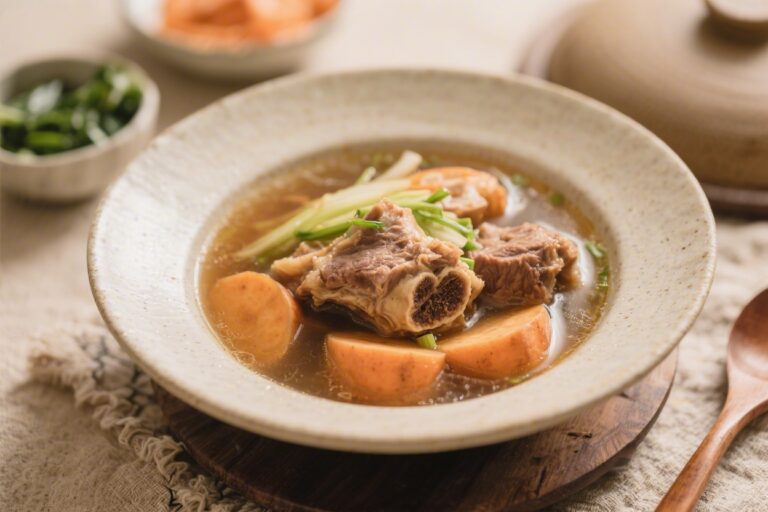
- Hearty Korean Galbitang (Beef Short Rib Soup) Made Simple – Comforting, Clean, and Satisfying
- Easy Korean Miyeok Guk (Seaweed Soup) for Beginners – Comforting, Nutritious, and Simple
- Spicy Korean Yukgaejang (Shredded Beef Soup) Recipe – Hearty, Fiery, and Comforting
Wrapping Up
This quick sundubu jjigae brings warmth, spice, and comfort to the table fast.
With a few pantry staples and soft tofu, you get a restaurant-style bowl any night of the week. Keep the steps simple, taste as you go, and finish with that silky egg for an extra treat. Pair with hot rice, and you’ve got a cozy, satisfying meal in minutes.
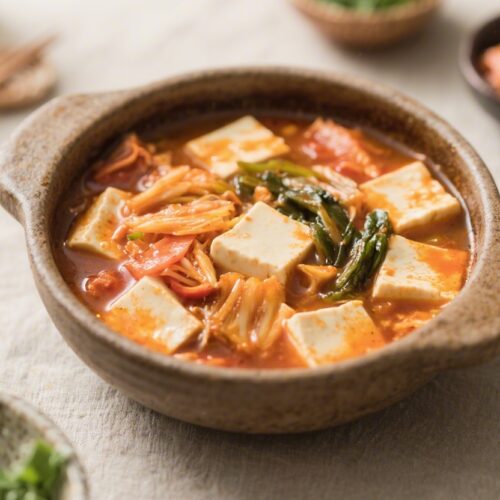
Quick Sundubu Jjigae (Soft Tofu Soup) for Busy Nights - Fast, Cozy, and Flavor-Packed
Ingredients
- 1 tablespoon neutral oil (canola, avocado, or grapeseed)
- 2 teaspoons sesame oil
- 2 cloves garlic, minced
- 1 teaspoon grated ginger (optional but nice)
- 2 tablespoons gochugaru (Korean red pepper flakes; adjust for heat)
- 1 tablespoon gochujang (Korean chili paste) or an extra 1 tablespoon gochugaru
- 1 to 1 1/2 tablespoons soy sauce, to taste
- 2 cups low-sodium chicken or vegetable broth (or anchovy/kelp broth if you have it)
- 1/2 cup thinly sliced onion
- 1/2 cup sliced mushrooms (shiitake, cremini, or enoki)
- 4 to 6 ounces thinly sliced pork belly, beef, or shrimp (optional; pick one)
- 1 tube extra-soft tofu (sundubu), or 14 ounces silken/soft tofu
- 1 egg (optional, for finishing)
- 1 to 2 scallions, thinly sliced
- Salt and pepper, to taste
- Kimchi (optional, chopped, about 1/2 cup, for extra punch)
Instructions
- Heat the pot. Set a medium saucepan or small pot over medium heat. Add the neutral oil and sesame oil. When the oil shimmers, you’re ready.
- Bloom the aromatics. Add garlic and ginger. Stir for 20–30 seconds until fragrant. Don’t let it burn.
- Build the base. Add gochugaru and gochujang. Stir for 15–20 seconds to bloom the spices. The mixture will look like a red paste and smell toasty.
- Deglaze and simmer. Pour in the broth and soy sauce, scraping the bottom to dissolve any browned bits. Add the onion and mushrooms. If using kimchi, stir it in now.
- Add protein (optional). If you’re using pork, beef, or shrimp, add it and simmer for 3–4 minutes until just cooked. Skim any foam if you like a cleaner broth.
- Add the tofu. Gently spoon in the soft tofu, breaking it into big chunks with your spoon. Keep the pieces large so they stay silky. Simmer for 4–5 minutes to heat through.
- Taste and adjust. Add a pinch of salt if needed, or more soy sauce for depth. If you want extra heat, sprinkle in more gochugaru.
- Finish with the egg. Crack an egg straight into the bubbling soup. Let it poach for 1–2 minutes for a runny yolk, or longer for a firmer set. Top with scallions and a few grinds of pepper.
- Serve hot. Ladle into bowls. Serve with steamed rice and, if you like, a drizzle of sesame oil or a side of kimchi.
Printable Recipe Card
Want just the essential recipe details without scrolling through the article? Get our printable recipe card with just the ingredients and instructions.