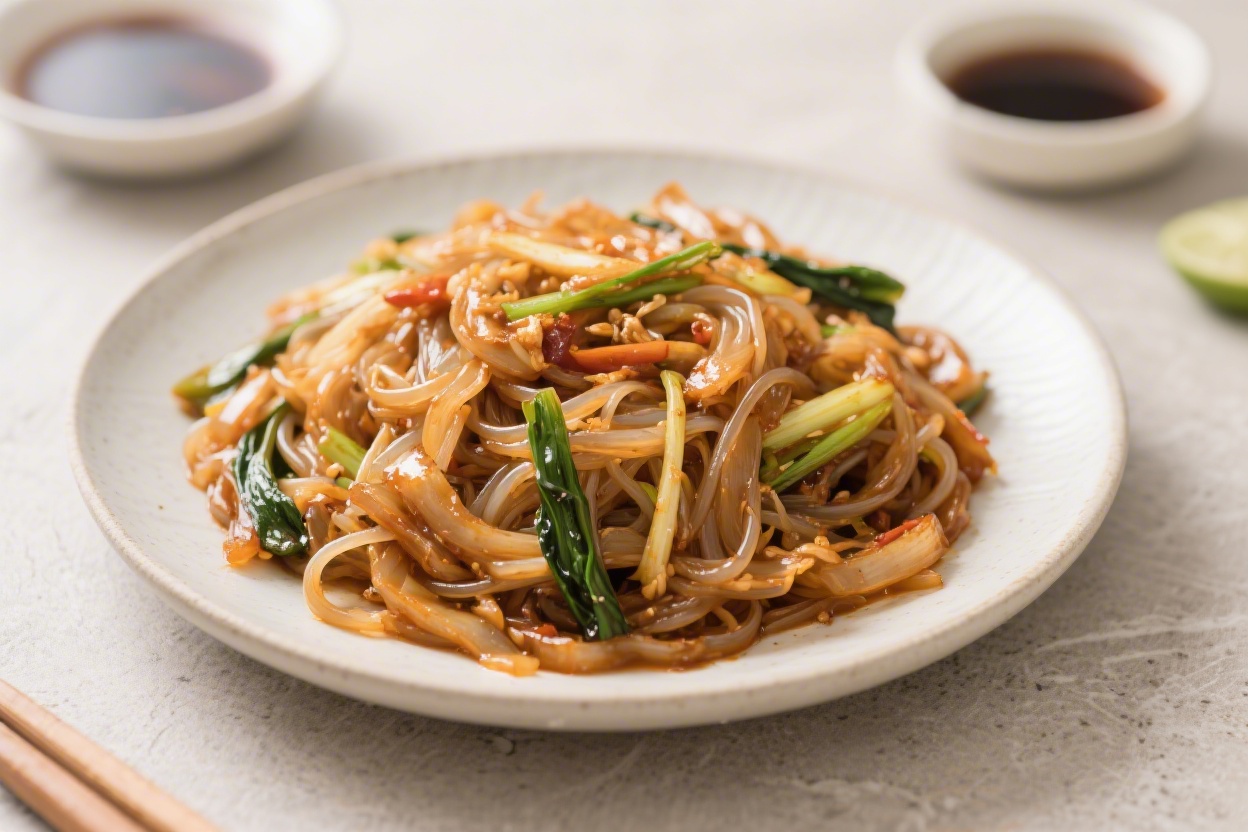
Homemade Korean Japchae Made Easy Recipe
Japchae is one of those dishes that looks fancy but feels cozy and familiar once you try it. Chewy sweet potato glass noodles, colorful vegetables, and a savory-sweet sauce come together in one balanced, satisfying stir-fry. It’s perfect for dinner, meal prep, or a party platter because it tastes great warm, at room temperature, or even straight from the fridge.
This version keeps the authentic flavors while simplifying the steps so you can make it any night of the week. If you love texture, color, and a little sweetness in your savory dishes, this one’s for you.
What Makes This Special
- Balanced flavors: Japchae is known for its sweet-savory soy sauce base that pairs perfectly with tender noodles and crisp vegetables.
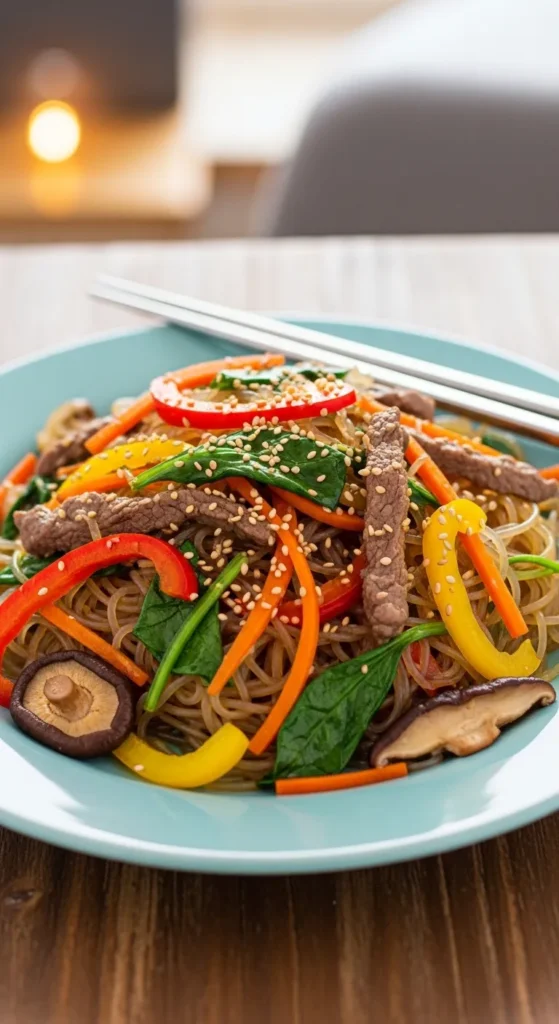
- Great texture: The bouncy, glassy noodles (made from sweet potato starch) are the star, supported by soft mushrooms, crunchy carrots, and silky onions.
- Flexible and forgiving: Swap vegetables, go vegetarian, or add protein. It still works.
- Make-ahead friendly: It reheats beautifully and is just as delicious at room temperature.
- Looks impressive, cooks simply: A few basic techniques deliver restaurant-level results.
What You’ll Need
- 8 oz (225 g) Korean sweet potato glass noodles (dangmyeon)
- 1 small onion, thinly sliced
- 2 medium carrots, julienned
- 1 red bell pepper, thinly sliced
- 4 oz (115 g) spinach (baby or regular, roughly chopped)
- 6–8 shiitake mushrooms, sliced (or cremini)
- 2 green onions, thinly sliced
- 2 cloves garlic, minced
- 2 eggs (optional, for egg ribbons)
- 8 oz (225 g) beef ribeye or sirloin, very thinly sliced (optional; or use firm tofu)
- 2–3 tbsp neutral oil (such as canola or grapeseed)
Sauce:
- 4 tbsp soy sauce (use tamari for gluten-free)
- 2 tbsp sugar (or honey, to taste)
- 1 tbsp sesame oil
- 1 tbsp mirin (optional, for depth)
- 1–2 tsp rice vinegar (optional, for brightness)
- Freshly ground black pepper, to taste
Finishing touches:
- 1–2 tsp toasted sesame seeds
- Extra sesame oil for finishing (optional)
- Salt, to taste
Step-by-Step Instructions
- Make the sauce. In a bowl, whisk soy sauce, sugar, sesame oil, mirin, rice vinegar (if using), and black pepper until the sugar dissolves.Set aside.
- Prep the noodles. Boil a large pot of water. Add glass noodles and cook according to package directions (usually 6–8 minutes) until just tender and bouncy. Drain, rinse under cool water, and cut once or twice with kitchen shears for easier eating.Toss with 1–2 teaspoons sesame oil to prevent sticking.
- Cook the spinach. In the same pot of hot water, quickly blanch the spinach for 20–30 seconds, then drain and squeeze out excess water. Season lightly with a pinch of salt and a few drops of sesame oil. Set aside.
- Optional egg ribbons. Beat the eggs with a pinch of salt.Heat a nonstick pan with a few drops of oil over low heat. Pour in the eggs to form a thin omelet. Cook just until set, flip briefly, then cool and slice into thin ribbons.Set aside.
- Stir-fry the beef or tofu (optional). Heat 1 tablespoon oil over medium-high heat. Add the thinly sliced beef with a spoonful of the sauce, and stir-fry 1–2 minutes until just cooked. Remove to a large mixing bowl.For tofu, pan-sear firm slices or cubes until golden, then season with a little sauce.
- Sauté the vegetables. Add a bit more oil if needed. Stir-fry onions and mushrooms with a pinch of salt until soft and fragrant, 3–4 minutes. Add carrots and bell pepper; cook until crisp-tender, 2–3 minutes.Add garlic and green onions; cook 30 seconds until aromatic. Transfer everything to the large mixing bowl.
- Combine noodles and sauce. Add the cooked noodles to the mixing bowl. Pour in most of the sauce and toss well with tongs or clean hands until evenly coated.Add the spinach and egg ribbons, then toss again. Taste and add the remaining sauce if needed.
- Finish and adjust. Sprinkle sesame seeds and an extra drizzle of sesame oil. Adjust salt, pepper, and sweetness to taste.The flavor should be slightly sweet, savory, and well-seasoned.
- Serve. Enjoy warm, at room temperature, or chilled. Japchae holds its texture and flavor beautifully.
Storage Instructions
- Refrigerator: Store in an airtight container for up to 4 days.
- Freezer: Not recommended. The noodles can turn mushy after thawing.
- Reheating: Warm gently in a skillet over medium heat with a splash of water or a touch of oil.You can also microwave in short intervals, stirring between bursts.
- Meal prep tip: Keep extra sauce on hand to refresh flavor after reheating.
Benefits of This Recipe
- Vegetable-forward: A generous mix of vegetables adds color, nutrients, and crunch.
- Customizable protein: Works with beef, chicken, tofu, or mushrooms as the main protein.
- Make-ahead friendly: Ideal for potlucks, lunch boxes, and weekly meal plans.
- Gluten-free option: Use tamari or a gluten-free soy alternative.
- Beginner-friendly: Simple steps and flexible timing keep stress low.
Common Mistakes to Avoid
- Overcooking the noodles: They should be springy, not soft. Rinse to stop cooking and toss with sesame oil to prevent clumping.
- Skipping seasoning as you go: Lightly salting veggies brings out flavor and keeps the final dish balanced.
- Dumping everything in one pan at once: Cook components separately to control texture, then combine at the end.
- Using weak heat: A hot pan helps vegetables stay crisp and bright.
- Under-saucing: Noodles absorb seasoning. Taste and add more sauce as needed at the end.
Recipe Variations
- Vegetarian Japchae: Skip meat and add extra mushrooms, tofu, or tempeh.A splash of mushroom soy deepens umami.
- Chicken Japchae: Thinly slice chicken thighs and stir-fry with a spoonful of sauce until just cooked.
- Spicy Japchae: Add gochugaru (Korean red pepper flakes) or a bit of gochujang to the sauce for a gentle heat.
- Extra greens: Swap spinach for kale or bok choy, sliced thin and briefly sautéed.
- Low-sugar tweak: Reduce sugar and add a touch more mirin or use a pinch of monk fruit sweetener.
- Nutty boost: Add crushed roasted peanuts or more sesame seeds for extra crunch.
FAQ’s
What are glass noodles made of?
Glass noodles for japchae are made from sweet potato starch. They turn clear and chewy when cooked, giving japchae its signature texture.
Can I use regular pasta instead?
You can, but it won’t taste or feel like japchae. If you must substitute, use rice noodles or bean thread noodles, but adjust cooking time and sauce to taste.
How do I slice beef thin enough?
Partially freeze the beef for 30–45 minutes, then slice against the grain with a sharp knife.
Aim for paper-thin slices so they cook in a minute or two.
Can I make this completely ahead of time?
Yes. Japchae holds up well. Toss with a little extra sauce or sesame oil before serving to refresh the flavor and gloss.
Why is my japchae bland?
Noodles soak up seasoning.
Add more sauce in small amounts, mix thoroughly, and taste. A small pinch of salt and a drizzle of sesame oil can also help.
Is japchae served hot or cold?
Either works. It’s delicious warm, at room temperature, or chilled.
Many people enjoy it at room temp for parties and picnics.
How do I keep the noodles from sticking?
Rinse after boiling and toss with sesame oil. If they clump later, loosen with clean hands and a splash of water or extra sauce.
Can I make it gluten-free?
Yes. Use tamari or a certified gluten-free soy sauce.
The sweet potato noodles are naturally gluten-free.
Related Recipes
- Quick and Easy Korean Ramen (Ramyeon) Upgrade Ideas – Fast, Flavorful, and Satisfying
- Easy Korean Tteokbokki (Spicy Rice Cakes) Recipe
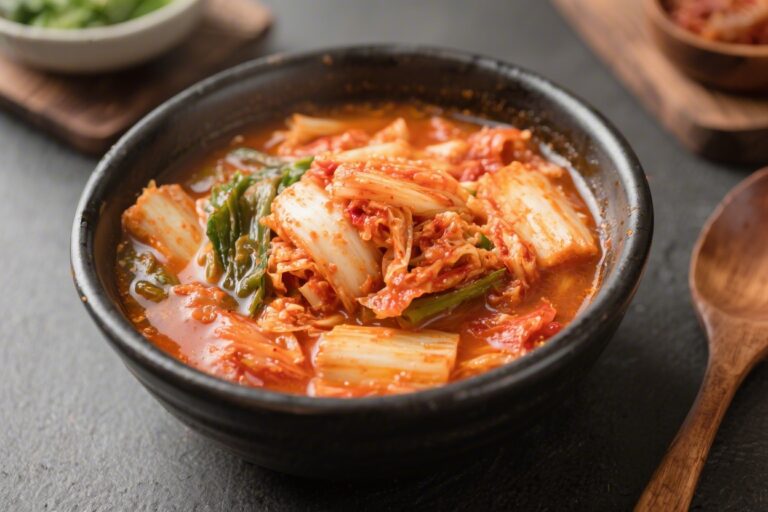
- Easy Kimchi Jjigae Recipe (Spicy Korean Kimchi Soup) – Comforting, Flavorful, and Fast
Wrapping Up
Japchae brings together chewy noodles, crisp vegetables, and a glossy, sweet-savory sauce in a way that feels both special and simple. With a few smart steps—cook components separately, season as you go, and finish with enough sauce—you’ll get consistent, restaurant-quality results. Make it your own with your favorite protein and veggies, and enjoy it fresh, packed for lunch, or served to a crowd.
This is the kind of recipe that quickly becomes a go-to.
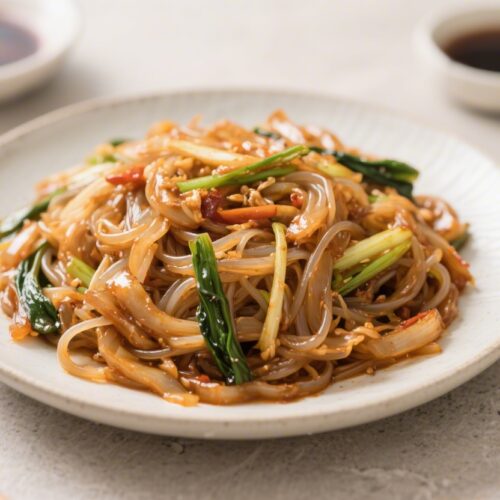
Homemade Korean Japchae (Glass Noodle Stir-Fry) Made Easy - A Flavorful, Weeknight-Friendly Classic
Ingredients
- 8 oz (225 g) Korean sweet potato glass noodles (dangmyeon)
- 1 small onion, thinly sliced
- 2 medium carrots, julienned
- 1 red bell pepper, thinly sliced
- 4 oz (115 g) spinach (baby or regular, roughly chopped)
- 6–8 shiitake mushrooms, sliced (or cremini)
- 2 green onions, thinly sliced
- 2 cloves garlic, minced
- 2 eggs (optional, for egg ribbons)
- 8 oz (225 g) beef ribeye or sirloin, very thinly sliced (optional; or use firm tofu)
- 2–3 tbsp neutral oil (such as canola or grapeseed)
- 4 tbsp soy sauce (use tamari for gluten-free)
- 2 tbsp sugar (or honey, to taste)
- 1 tbsp sesame oil
- 1 tbsp mirin (optional, for depth)
- 1–2 tsp rice vinegar (optional, for brightness)
- Freshly ground black pepper, to taste
- 1–2 tsp toasted sesame seeds
- Extra sesame oil for finishing (optional)
- Salt, to taste
Instructions
- Make the sauce. In a bowl, whisk soy sauce, sugar, sesame oil, mirin, rice vinegar (if using), and black pepper until the sugar dissolves. Set aside.
- Prep the noodles. Boil a large pot of water. Add glass noodles and cook according to package directions (usually 6–8 minutes) until just tender and bouncy. Drain, rinse under cool water, and cut once or twice with kitchen shears for easier eating. Toss with 1–2 teaspoons sesame oil to prevent sticking.
- Cook the spinach. In the same pot of hot water, quickly blanch the spinach for 20–30 seconds, then drain and squeeze out excess water. Season lightly with a pinch of salt and a few drops of sesame oil. Set aside.
- Optional egg ribbons. Beat the eggs with a pinch of salt. Heat a nonstick pan with a few drops of oil over low heat. Pour in the eggs to form a thin omelet. Cook just until set, flip briefly, then cool and slice into thin ribbons. Set aside.
- Stir-fry the beef or tofu (optional). Heat 1 tablespoon oil over medium-high heat. Add the thinly sliced beef with a spoonful of the sauce, and stir-fry 1–2 minutes until just cooked. Remove to a large mixing bowl. For tofu, pan-sear firm slices or cubes until golden, then season with a little sauce.
- Sauté the vegetables. Add a bit more oil if needed. Stir-fry onions and mushrooms with a pinch of salt until soft and fragrant, 3–4 minutes. Add carrots and bell pepper; cook until crisp-tender, 2–3 minutes. Add garlic and green onions; cook 30 seconds until aromatic. Transfer everything to the large mixing bowl.
- Combine noodles and sauce. Add the cooked noodles to the mixing bowl. Pour in most of the sauce and toss well with tongs or clean hands until evenly coated. Add the spinach and egg ribbons, then toss again. Taste and add the remaining sauce if needed.
- Finish and adjust. Sprinkle sesame seeds and an extra drizzle of sesame oil. Adjust salt, pepper, and sweetness to taste. The flavor should be slightly sweet, savory, and well-seasoned.
- Serve. Enjoy warm, at room temperature, or chilled. Japchae holds its texture and flavor beautifully.
Printable Recipe Card
Want just the essential recipe details without scrolling through the article? Get our printable recipe card with just the ingredients and instructions.