Easy Korean Bibimbap Recipe for Beginners
Bibimbap is one of those dishes that looks impressive but is surprisingly simple once you know the steps. It’s a colorful Korean rice bowl topped with vegetables, protein, and a spicy-sweet sauce that ties everything together. The best part is you can use what you already have in your fridge.
This version is beginner-friendly, quick to prep, and flexible. By the end, you’ll have a balanced, satisfying meal that feels special without any stress.
Why This Recipe Works
This bibimbap keeps the technique simple while delivering bold, classic flavors. You cook each topping quickly so the textures stay fresh and crisp, then finish with a fried egg for richness.
The homemade gochujang sauce is easy to whisk together and instantly gives that signature Korean flavor—sweet, spicy, and savory. Because everything is cooked separately and assembled at the end, it’s easy to control doneness and seasoning. Plus, the recipe is built for substitutions, so you can swap ingredients based on what you like or have on hand.
Shopping List
- Cooked white rice (short-grain preferred; jasmine or medium-grain also works)
- Protein: thinly sliced beef, chicken, tofu, or mushrooms
- Vegetables: carrot, cucumber, zucchini, spinach, bean sprouts, shiitake or button mushrooms
- Aromatics: garlic, green onions (optional)
- Eggs: 1 per bowl (fried sunny-side up is classic)
- Neutral oil (vegetable, canola, or avocado)
- Sesame oil
- Soy sauce
- Rice vinegar (or apple cider vinegar)
- Gochujang (Korean red chili paste)
- Sugar or honey
- Sesame seeds
- Salt and black pepper
- Optional add-ons: kimchi, nori (seaweed), radish, lettuce
How to Make It
- Cook the rice. Rinse 1 to 1.5 cups of short-grain rice until the water runs clear.Cook according to package instructions. Keep it warm and slightly sticky—it helps toppings sit nicely on the bowl.
- Prep the vegetables. Cut carrot and zucchini into thin matchsticks. Slice mushrooms.Rinse spinach and bean sprouts. Thinly slice cucumber and sprinkle with a pinch of salt to soften slightly; set aside.
- Make the sauce. In a small bowl, whisk 2 tablespoons gochujang, 1 tablespoon soy sauce, 1 tablespoon sesame oil, 1 tablespoon sugar or honey, 1 teaspoon rice vinegar, and 1 tablespoon water. Adjust to taste: add more gochujang for heat or more honey for sweetness.
- Cook the protein. Heat 1 tablespoon neutral oil in a pan over medium-high.Add your protein (beef, chicken, tofu, or mushrooms). Season with 1 teaspoon soy sauce, a small pinch of sugar, black pepper, and a little minced garlic. Cook until browned and just cooked through.Finish with a light drizzle of sesame oil.
- Sauté the vegetables separately. In the same pan, add a bit of oil if needed. Quickly sauté carrot with a pinch of salt for 1–2 minutes until slightly tender but still crisp; remove. Repeat with zucchini, then mushrooms.Keep each topping simple—just salt and a whisper of garlic if you like.
- Blanch greens and sprouts. Bring a small pot of water to a boil. Blanch spinach for 30 seconds, then drain and squeeze out excess water. Toss with a few drops of sesame oil and a pinch of salt.Blanch bean sprouts for 1 minute, drain, and season lightly with salt and sesame oil.
- Fry the eggs. Heat a little oil in a nonstick pan over medium heat. Crack in eggs and cook sunny-side up until whites are set and yolks are runny. Season lightly with salt and pepper.
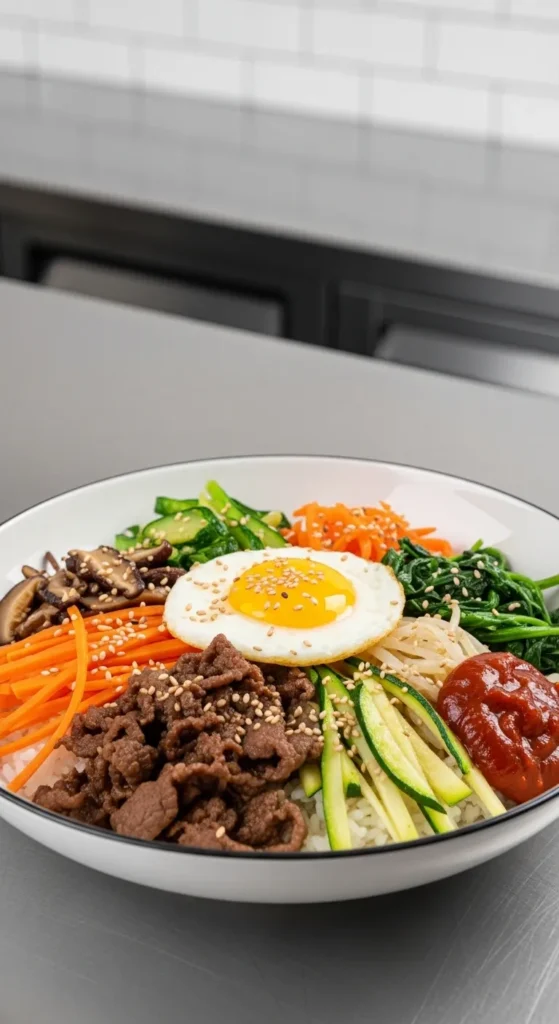
- Assemble the bowls. Add warm rice to each bowl.Arrange vegetables and protein in neat sections on top: carrots, zucchini, mushrooms, spinach, bean sprouts, cucumbers, and your chosen protein. Place the egg in the center. Sprinkle with sesame seeds.
- Add sauce and mix. Spoon 1–2 tablespoons of the gochujang sauce over the bowl.Mix everything together just before eating so the sauce coats the rice and toppings evenly.
How to Store
Store leftover components separately in airtight containers for up to 3 days. Keep rice, cooked vegetables, and protein in the fridge; the sauce can last up to a week. Reheat rice and protein gently in the microwave or on the stovetop with a splash of water to keep moisture.
Add fresh cucumber and a freshly fried egg when serving to keep textures bright.
Benefits of This Recipe
- Balanced and nutritious: A good mix of carbs, protein, fiber, and healthy fats.
- Customizable: Works with many vegetables and proteins, from beef to tofu.
- Beginner-friendly steps: Each topping cooks quickly and simply, so nothing feels overwhelming.
- Meal-prep friendly: Make components ahead and assemble when you’re ready to eat.
- Big flavor payoff: The sauce adds depth without hours of cooking.
Pitfalls to Watch Out For
- Overcooking vegetables: Aim for tender-crisp, not mushy. Quick sautéing keeps color and crunch.
- Using cold, dry rice: If your rice is cold, warm it with a splash of water. Warm rice helps everything meld.
- Skipping seasoning: Light salt and a touch of sesame oil on each component make a big difference.
- Too much sauce at once: Start with 1 tablespoon per bowl, mix, then add more if needed.
- Eggs cooked too hard: A runny yolk is part of the magic—it acts like a creamy sauce.
Variations You Can Try
- Tofu bibimbap: Use firm tofu, pat dry, pan-sear until golden, and season with soy sauce and garlic.
- Chicken or beef bulgogi style: Marinate thin slices in soy sauce, sugar, garlic, and a little grated pear or apple for extra tenderness.
- Vegetarian mushroom medley: Combine shiitake, oyster, and cremini for a meaty bite.
- Brown rice or quinoa: Swap the base for extra fiber while keeping the method the same.
- Dolsot (hot stone) style: If you have a stone or cast-iron bowl, heat it with oil and press rice in to form a crispy layer before adding toppings.
- Extra crunch: Top with toasted seaweed strips, radish matchsticks, or roasted kimchi.
- Mild version: Reduce gochujang and add more soy sauce and honey, or serve sauce on the side.
FAQ’s
What is gochujang and can I substitute it?
Gochujang is a Korean fermented chili paste that’s savory, slightly sweet, and full of umami.
It’s key to that classic bibimbap flavor. If you can’t find it, mix chili garlic sauce with a little miso or soy sauce and honey. It won’t be the same, but it gets you close in a pinch.
Can I make this gluten-free?
Yes.
Use tamari or a certified gluten-free soy sauce, and check your gochujang label for wheat. Serve with rice that’s naturally gluten-free, and you’re set.
Do I have to cook each vegetable separately?
Cooking separately gives you better texture and control, but you can streamline. Sauté carrots and zucchini together if you’re short on time.
Just avoid overcrowding the pan so they don’t steam.
Is bibimbap spicy?
It can be, but it doesn’t have to be. The spice level comes from the gochujang sauce. Start with less and add more to taste, or thin it with a little water and honey for a milder version.
What kind of rice works best?
Short-grain white rice is ideal because it’s sticky and holds the bowl together.
Medium-grain or jasmine works too. If using brown rice, cook it a bit longer and keep it warm before serving.
Can I meal-prep this?
Absolutely. Prep and store each topping separately, make the sauce ahead, and cook fresh eggs when you’re ready to eat.
It assembles in minutes and tastes freshly made.
How can I add more protein?
Double the portion of meat or tofu, add an extra egg, or toss in edamame. A sprinkle of roasted peanuts or almonds also boosts protein and crunch.
In Conclusion
This easy bibimbap is friendly for beginners while staying true to the dish’s spirit—colorful, balanced, and full of flavor. With a few simple steps and a flexible ingredient list, you can build a satisfying bowl any night of the week.
Keep the rice warm, the vegetables crisp, and the sauce bold. Once you’ve made it once or twice, you’ll have a new go-to meal that’s both comforting and fresh.
Easy Korean Bibimbap Recipe for Beginners - A Simple, Flavorful Rice Bowl
Ingredients
- Cooked white rice (short-grain preferred; jasmine or medium-grain also works)
- Protein: thinly sliced beef, chicken, tofu, or mushrooms
- Vegetables: carrot, cucumber, zucchini, spinach, bean sprouts, shiitake or button mushrooms
- Aromatics: garlic, green onions (optional)
- Eggs: 1 per bowl (fried sunny-side up is classic)
- Neutral oil (vegetable, canola, or avocado)
- Sesame oil
- Soy sauce
- Rice vinegar (or apple cider vinegar)
- Gochujang (Korean red chili paste)
- Sugar or honey
- Sesame seeds
- Salt and black pepper
- Optional add-ons: kimchi, nori (seaweed), radish, lettuce
Instructions
- Cook the rice. Rinse 1 to 1.5 cups of short-grain rice until the water runs clear. Cook according to package instructions. Keep it warm and slightly sticky—it helps toppings sit nicely on the bowl.
- Prep the vegetables. Cut carrot and zucchini into thin matchsticks. Slice mushrooms. Rinse spinach and bean sprouts. Thinly slice cucumber and sprinkle with a pinch of salt to soften slightly; set aside.
- Make the sauce. In a small bowl, whisk 2 tablespoons gochujang, 1 tablespoon soy sauce, 1 tablespoon sesame oil, 1 tablespoon sugar or honey, 1 teaspoon rice vinegar, and 1 tablespoon water. Adjust to taste: add more gochujang for heat or more honey for sweetness.
- Cook the protein. Heat 1 tablespoon neutral oil in a pan over medium-high. Add your protein (beef, chicken, tofu, or mushrooms). Season with 1 teaspoon soy sauce, a small pinch of sugar, black pepper, and a little minced garlic. Cook until browned and just cooked through. Finish with a light drizzle of sesame oil.
- Sauté the vegetables separately. In the same pan, add a bit of oil if needed. Quickly sauté carrot with a pinch of salt for 1–2 minutes until slightly tender but still crisp; remove. Repeat with zucchini, then mushrooms. Keep each topping simple—just salt and a whisper of garlic if you like.
- Blanch greens and sprouts. Bring a small pot of water to a boil. Blanch spinach for 30 seconds, then drain and squeeze out excess water. Toss with a few drops of sesame oil and a pinch of salt. Blanch bean sprouts for 1 minute, drain, and season lightly with salt and sesame oil.
- Fry the eggs. Heat a little oil in a nonstick pan over medium heat. Crack in eggs and cook sunny-side up until whites are set and yolks are runny. Season lightly with salt and pepper.
- Assemble the bowls. Add warm rice to each bowl. Arrange vegetables and protein in neat sections on top: carrots, zucchini, mushrooms, spinach, bean sprouts, cucumbers, and your chosen protein. Place the egg in the center. Sprinkle with sesame seeds.
- Add sauce and mix. Spoon 1–2 tablespoons of the gochujang sauce over the bowl. Mix everything together just before eating so the sauce coats the rice and toppings evenly.
Printable Recipe Card
Want just the essential recipe details without scrolling through the article? Get our printable recipe card with just the ingredients and instructions.