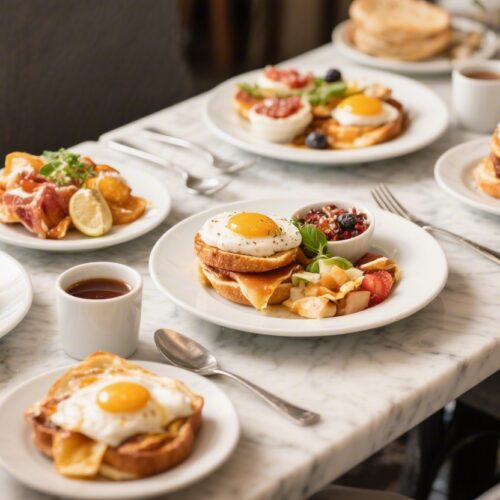
Plan your menu with a simple formula. Choose 1 egg dish, 1 protein, 1 baked item, 1 fresh side, and 1 “fun” board (like avocado toast or bagels).
Add a yogurt parfait option and two beverages.
Prep the day before. Bake the egg dish to reheat, wash and cut fruit, slice veggies, whip herbed yogurt, and set out serveware. Store everything labeled in the fridge.
Designate stations. Keep beverages near the kitchen, food on a central table, and plates/napkins at the start of the line. Put condiments at the end to prevent crowding.
Use height for visual appeal. Stack books under a runner or use a tiered stand so platters sit at different levels.
It looks styled and saves space.
Set a bread-and-spread corner. Arrange bagels, mini toasts, or croissants with butter, jam, cream cheese, and honey. Add a small knife or spreader for each item.
Build a simple avocado toast board. Lay out sliced sourdough, mashed avocado with lemon, cherry tomatoes, arugula, feta, chili flakes, and olive oil. Include a small card with “How to Build It.”
Keep hot foods hot, cold foods cold. Use warm ovens or insulated dishes for eggs and sausage.
Nest yogurt and fruit over a shallow pan of ice if the room is warm.
Label everything. Use small cards to mark dishes and note allergens (gluten-free, dairy-free, vegetarian). It reduces questions and helps guests choose confidently.
Set up beverages last. Brew coffee, heat water for tea, and pour juice into a carafe. For mimosas, offer sparkling wine and juice side-by-side with fruit garnishes.
Add finishing touches. Place a small vase with greenery, light a couple of unscented candles, and put a trash and recycling bin within easy reach.
Open the buffet with a quick welcome. Point out the flow, mention dietary notes, and invite guests to help themselves.
Then enjoy your own plate.